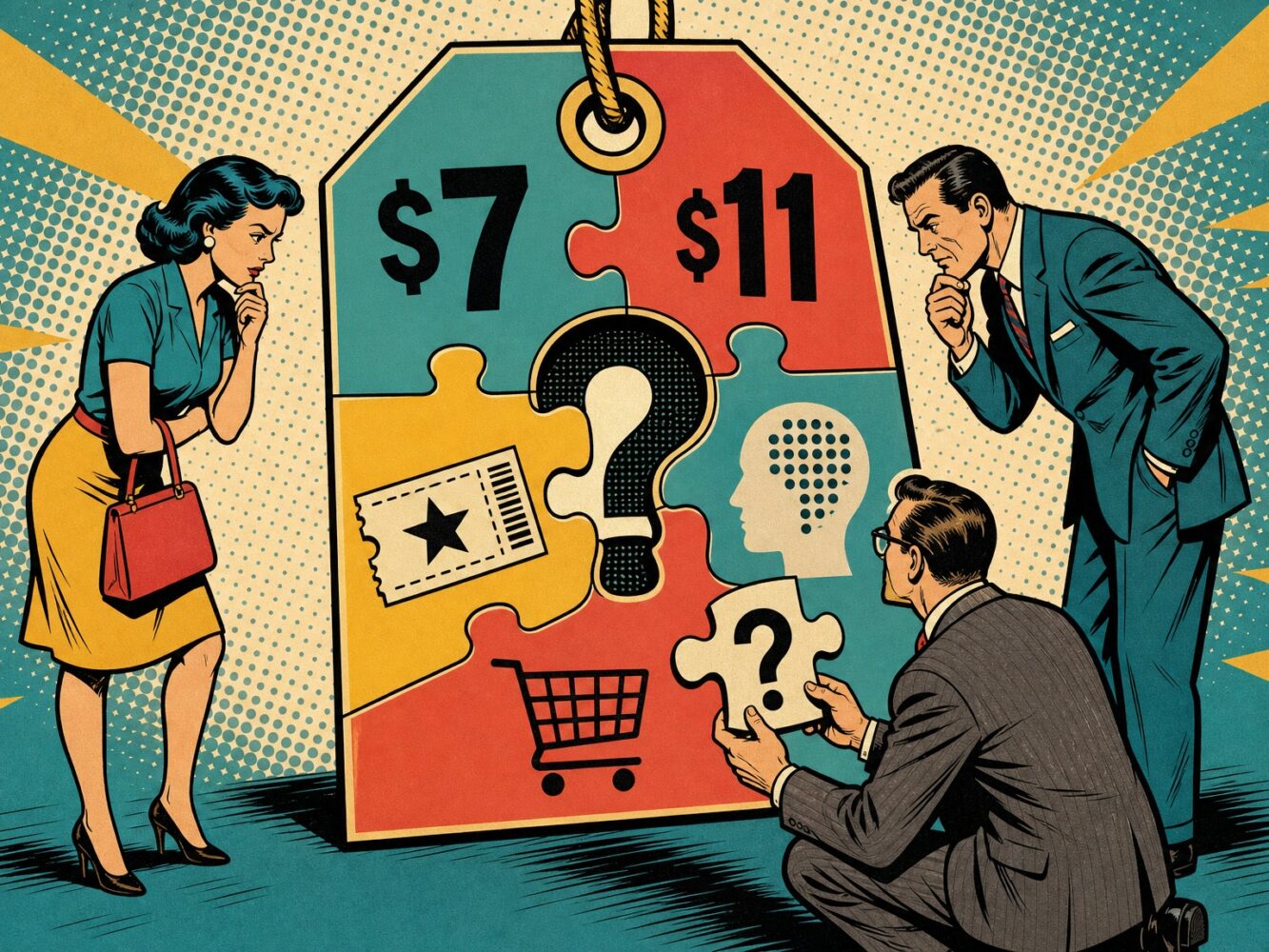
A price that knows your name may be creepy. It may also be a bargain. That ambiguity sits at the heart of the Federal Trade Commission’s (FTC) proposed enforcement policy statement on personalized pricing, which opens with a candid admission: The practice is “not well understood,” and its effects on consumers remain “unclear.” That uncertainty should shape the final policy.
Personalized pricing is a technologically refined form of price discrimination—charging different customers different prices for the same product or service. But it is not one practice with one predictable effect. Depending on the market, consumer demand, competition, and what would happen without personalization, it may lower prices, expand output, sharpen competition, or raise legitimate consumer concerns.
The FTC should therefore draw a clear legal line. A seller may not misrepresent what a price is, who can obtain it, or why it was offered. But a seller does not necessarily deceive consumers merely by failing to volunteer that individualized information helped determine the price. Turning that silence into a violation would allow a consumer’s assumption to create a duty to disclose—and could make beneficial discounts harder to offer.
As a new Mercatus Center policy comment puts it, “[a] final statement built around those limits, coupled with express protection for individualized discounts, would deter genuine deception and unfairness while preserving price competition and experimentation that can lower prices and expand output.”
Uniform Pricing Isn’t Uniformly Better
The economic case for caution is simple. A uniform price may exclude consumers willing to pay more than the cost of serving them but less than the single price that maximizes the seller’s profit. If the seller can identify these price-sensitive consumers, it may profitably offer them discounts, sell more, and reduce deadweight loss—the value lost when mutually beneficial sales never happen. Personalized offers can also sharpen competition by targeting discounts at consumers most likely to switch sellers. The United States made these points in a submission to the Organisation for Economic Co-operation and Development (OECD), explaining that personalized pricing can enhance competition when it does not involve deception or unlawful discrimination.
The word “personalized” does not answer the central question: Who benefits, and compared with what? As John Yun has explained, the competitive setting and the alternative to personalized pricing matter more than personalization itself. The same practice can have different effects in a highly competitive market, a concentrated market, and one in which consumers can readily compare offers.
The empirical evidence also resists easy conclusions. Jean-Pierre Dubé and Sanjog Misra found that personalization reduced total consumer surplus—the aggregate benefit consumers receive beyond what they pay—in their experimental setting. Yet more than 60% of consumers benefited. Research on Amazon found personalized net prices delivered through targeted coupons, rather than a simple pattern of individualized surcharges. That distinction matters. If regulators make targeted discounts legally risky, sellers may replace them with higher uniform prices, harming the consumers who would have received a deal.
Regulators also should not treat every price set by an algorithm as exploitation with better software. Economic analysis of algorithmic pricing emphasizes that the relevant question is whether the practice improves market performance, not whether a computer helped set the price. Treating pricing technology as presumptively suspect could suppress the experimentation that helps firms discover cheaper ways to serve consumers.
Your Price Is Not Everyone’s Price
The proposal stands on firm ground when a seller makes a false claim—for example, by stating or clearly implying that everyone receives the same price when they do not. The legal trouble begins when the FTC suggests that a seller may deceive consumers whenever they reasonably believe a price is fixed or widely available and the seller fails to disclose that it was personalized.
That approach risks allowing a consumer’s preexisting belief, rather than anything the seller said or did, to create a duty to speak. It is hard to square with the FTC’s settled test for deception. That test asks whether a representation, omission, or practice is likely to mislead a reasonable consumer on a material point—one that could affect the consumer’s decision. The FTC’s Policy Statement on Deception sets out this test.
The FTC’s own decisions distinguish a misleading omission from a “pure omission”—something the seller never addressed and whose silence conveys no particular message. In International Harvester, the FTC warned that deception could expand almost without limit if consumers’ mistaken preconceptions were enough to establish it. The FTC’s Food Advertising Policy Statement makes the same point: Not every omission is deceptive, and silence misleads only when the context gives it that meaning.
A displayed price ordinarily communicates one straightforward proposition: The consumer may buy the product at that price. It does not necessarily promise that every other consumer can get the same price at the same time. That implication is especially doubtful in markets where coupons, loyalty programs, negotiated prices, retention offers, and targeted promotions are commonplace.
If a transaction actually conveys a uniform-price claim, established doctrine already gives the FTC the tools to prove it. The agency may use consumer surveys and other evidence beyond the seller’s words to show how reasonable consumers understand an implied claim. That is a long way from requiring every seller to explain its pricing model when it never suggested that prices were uniform.
A Disclosure Mandate in Search of a Statute
The proposal’s reliance on FTC v. Colgate-Palmolive does not erase this distinction. That case involved a false claim about how an advertised “special” price compared with the product’s ordinary selling price. It did not require sellers to volunteer every material fact consumers might want to know about how they set prices.
The Fair Credit Reporting Act (FCRA) does not establish a broader disclosure duty under Section 5 of the Federal Trade Commission Act, which prohibits unfair or deceptive business practices. Congress expressly required businesses to provide adverse-action notices when they use consumer reports in certain covered decisions. That targeted requirement appears in 15 U.S.C. § 1681m(a). Its specificity should make the FTC cautious about reading Section 5 alone to require similarly detailed disclosures about whether a price was personalized, why it was personalized, and what kinds of data informed it.
Disclosure also carries costs. An explanation of a complex pricing system may confuse consumers more than it informs them. A rigid mandate to identify every “type” of data used could also push firms to abandon useful personalization and fall back on blunter, higher prices. Disclosure should correct a misleading impression—not force a seller to publish the blueprints for its pricing engine.
Someone Else’s Bargain Is Not Your Injury
The FTC needs the same discipline when invoking Section 5’s unfairness authority. Section 5(n) requires the agency to prove three things: substantial consumer injury, injury consumers could not reasonably avoid, and injury not outweighed by benefits to consumers or competition. The statutory text makes each requirement explicit, and the 11th U.S. Circuit Court of Appeals recently emphasized that the FTC must satisfy all three.
The right comparison is not necessarily the price another consumer received. It is the price the consumer likely would have paid without personalization. Suppose a seller would otherwise charge everyone $10 but instead offers one shopper $7 and another $11. That raises a different question from a case in which both shoppers would have paid $12 without personalization. Calling the $4 gap between the personalized prices an injury—without asking what the uniform price would have been—confuses price differences with consumer harm.
Whether consumers could reasonably avoid the injury also depends on how the transaction works. An upfront price that consumers can compare with competing offers differs from a fee revealed only after they become locked in. The FTC should ask what consumers knew, when they knew it, and whether they could walk away—not merely whether someone else got a better deal.
The proposal also seems to assume that sellers can preserve every benefit of personalized pricing while disclosing the practice. That is an empirical claim, not a legal axiom. Consumers may hide information to qualify for discounts, prompting firms to reduce targeted offers. The cost of explaining how a complex price was calculated may also discourage experimentation. Research on consumer tracking helps explain why firms often personalize prices through coupons and other discount mechanisms.
Section 5(n) requires the FTC to examine these effects. The agency cannot wave away competitive benefits simply because it can imagine a disclosure that might—emphasis on might—leave the pricing system unchanged.
Police the Lie, Preserve the Discount
The FTC can protect consumers without creating a de facto ban on personalized pricing. Its final statement should identify actionable conduct precisely: falsely claiming that a price is available to everyone, advertising a fictitious discount, misrepresenting why a price was offered, or deceptively collecting or using personal data. The remedy in each case should correct the particular false impression.
The FTC should also create an enforcement safe harbor—a rule protecting clearly defined lawful conduct—or at least a strong presumption against enforcement for genuine individualized discounts. That protection should cover personalized prices no higher than a genuine price generally available from the same seller at the same time. It should also cover targeted coupons, opt-in loyalty benefits, and retention offers unless the seller makes a separate false or misleading claim.
Such protection would reduce the risk that legal uncertainty prompts firms to withdraw lower-price offers. It would also preserve firms’ ability to test pricing methods that may strengthen competition. As I have previously argued, legal challenges to algorithmic pricing can impede such improvements by discouraging firms from testing new ways to match prices with consumer demand.
The governing principle is straightforward. Sellers must tell the truth about their prices. That obligation should not become a general duty to explain how every price was calculated simply because the FTC believes consumers expect uniform pricing. Deception requires a misleading representation, omission, or practice. Unfairness requires consumer injury that outweighs the benefits to consumers and competition.
The FTC should police the lie and preserve the discount.
