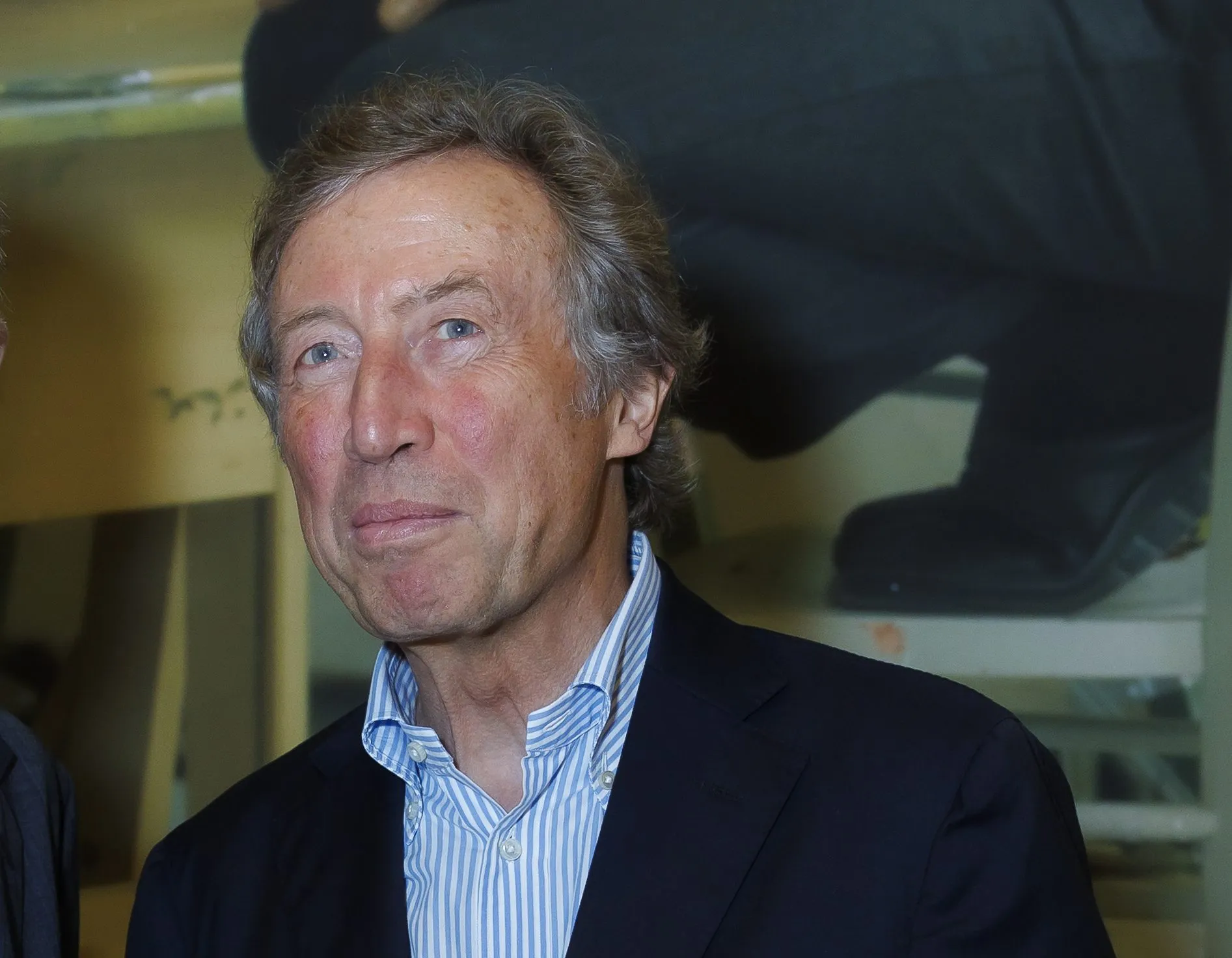
Germany’s richest person is also one of its most elusive billionaires. Dieter Schwarz, the 86-year-old reclusive owner of discount supermarket giant Lidl and its parent company, Schwarz Group, has amassed an estimated fortune of $47.8 billion while maintaining an exceptionally low public profile. His business empire, which generates $215 billion in annual revenue, speaks volumes. Lidl belongs to a category of low-price retailers that have grown strongly in recent years as consumers contend with high inflation. Its success also reflects a decades-long story of entrepreneurship and generational transition. Schwarz transformed a regional food wholesaler into an international enterprise spanning retail, manufacturing, recycling and technology.
Lidl’s origins date to 1930, when Dieter’s father, Josef Schwarz, established the food wholesaler Lidl & Schwarz KG in Heilbronn, Germany. Dieter joined the business in the 1950s, and the pair opened the first Lidl store in 1973. After his father died, Schwarz took over as CEO in 1977 and quickly accelerated the company’s expansion. By the 1980s, Lidl had grown to 300 locations across Germany.
Today, Lidl and Kaufland operate 14,550 stores across 33 countries under the Schwarz Group. Schwarz launched Kaufland, a hypermarket concept that combines a supermarket and department store, in 1984. Lidl entered the U.S. in 2017 and now operates 200 stores along the East Coast. Its largest U.S. presence is in New York, followed closely by Virginia, home to the company’s American headquarters.
Schwarz remains the Schwarz Group’s owner and controlling shareholder, maintaining authority through the nonprofit Dieter Schwarz Stiftung, or Dieter Schwarz Foundation, which he founded in 1999.
He lives in Heilbronn with his wife of 50 years, Franziska Weipert Schwarz, and they have two daughters, Monika and Regine. Unlike at other prominent family-owned companies, such as Mars, succession planning at Schwarz Group does not explicitly involve Dieter Schwarz’s family members. Instead, the company appointed Gerd Chrzanowski as CEO in 2021 after he spent two decades at Lidl. He succeeded longtime CEO Klaus Gehrig, who left after 45 years with the company amid a disagreement with Schwarz, according to Grocery Dive.
With no LinkedIn, X or other social media presence, Schwarz remains almost entirely out of the public eye. Unlike many ultra-wealthy founders who have embraced personal branding, he rarely gives interviews or attends press events. He is not even mentioned on the “About Us” pages of the Schwarz Group and Lidl websites.
Still, his influence is felt throughout his hometown. German newspaper BW24 reports that Schwarz has invested heavily in Heilbronn, helping fund coding schools, a university serving 8,000 students and research laboratories.
Schwarz’s diversification strategy extends beyond simply adding businesses to the portfolio. The group has built infrastructure that supports its core retail operations, providing greater control over everything from production and packaging to waste management. PreZero, originally Lidl’s waste-logistics department, now operates 470 sites that sort, process and recycle materials, handling 26 million tons of recyclables to date.
Because most Lidl and Kaufland products are private-label goods manufactured in-house by Schwarz Produktion, the group can directly influence packaging standards and environmental impact. It has pledged to use 65 percent recycled material in private-label packaging by 2030 and achieve net-zero emissions by 2050. That focus may resonate with consumers: according to Shorr’s 2025 Sustainable Packaging Consumer Report, which surveyed 2,016 U.S. consumers, 90 percent said they are more likely to purchase from a brand or retailer if its packaging is eco-friendly.
Beyond retail, manufacturing and recycling, Schwarz Group has also built an IT and cloud-services division, Schwarz Digits, which has secured several high-profile technology partnerships. The unit generated $2.54 billion in fiscal 2025 revenue and has a long-term partnership with Google, as well as relationships with SAP, CrowdStrike and Salesforce. Schwarz Digits recently opened a new campus in Bad Friedrichshall, Germany, featuring green space, a daycare center, creative and meeting areas, and workspaces for 5,500 employees.
Schwarz also invests in tech startups. Most recently, Schwarz Group led a $600 million funding round in Canadian A.I. company Cohere. In 2023, the group participated in a $500 million Series B round for Aleph Alpha, one of Germany’s largest AI startups. Aleph Alpha was acquired by Cohere in April of this year.
Schwarz Group also recently submitted a bid tied to the European Commission’s $20 billion plan to build A.I. data centers. As Germany moves to quadruple A.I. data center capacity by 2030, an effort supported by a $4 billion investment from Microsoft, Schwarz is positioning his enterprises to benefit from growing demand for A.I. infrastructure and support services.

