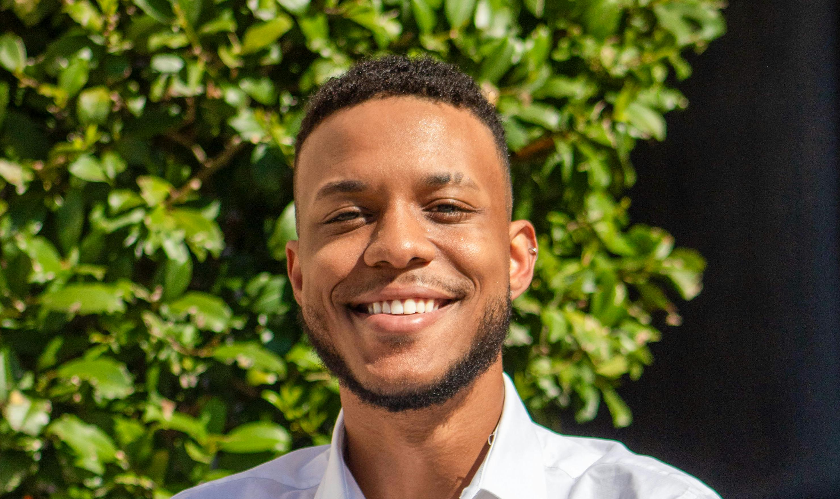
Antione Fields is competing against four other Democrats — Sylvain Doré, Xavier Monroe, Malik Moore and Jacquelyn Randall — to be the next Representative for House District 21.
The district includes southeast Alachua County and northwest Marion, running from Gainesville to Ocala. Incumbent Rep. Yvonne Hinson is eligible to run for one more term, but the 78-year-old said she is not seeking re-election because of her age and decreased bipartisanship in the Legislature.
No Republicans have qualified to run. The district is one of just five House seats north of Orlando currently held by Democrats.
Florida Politics asked all candidates to answer a few questions. We are publishing their responses unedited so voters can hear directly from candidates. Here’s what Fields told us:
— Profession: Senior Manager at Common Cause, a national nonpartisan voting rights and democracy organization, and former Florida House legislative aide with nearly a decade of experience in government, campaigns and advocacy. Previously served as a digital strategist at MissionWired, where I worked with progressive organizations and candidates, including leading email fundraising strategy for Val Demings’ U.S. Senate campaign.
— Education: Earned a bachelor’s degree in political science from the University of Central Florida, where I also interned in the Florida House of Representatives.
— Years in the district: Lifelong Floridian, raised in Ocala and a member of the community for 20 years.
— Community involvement: Member of the Marion County Branch of the NAACP, Sierra Club and Our Revolution; proud CWA union member and former member of my union’s Labor-Management Committee. I have spent years advocating for voting rights, workers’ rights and civic engagement and working alongside community and civil-rights leaders in Florida and across the country.
— Why are you running? What motivated you to run? My path into politics began with the death of Trayvon Martin. I was a teenager when George Zimmerman was acquitted, and I’ll never forget how powerless that moment made me feel. It changed how I thought about justice, government and whose voices our institutions listen to. I decided I wanted to understand how power worked — and how ordinary people could use it to change things. That decision shaped my career. I’ve worked on campaigns across Florida, inside the Florida Legislature, and alongside voting-rights and civil-rights leaders fighting corruption, voter suppression and the influence of big money in politics. But I decided to run for office this year because I became frustrated with what I saw as a gap in leadership and vision within my own party. There is a growing movement of progressive economic populism in this country. The election of leaders like New York City Mayor Zohran Mamdani showed that there is still an appetite for candidates willing to unapologetically challenge corporate power and fight for transformational change. There is plenty of debate about whether that kind of politics can work in Florida. I believe it can. Floridians are fed up. People are working hard and still falling behind, and many have become deeply distrustful of political leaders in both parties. I don’t think the answer is to offer them more of the same. We need a new generation of leaders willing to fight for universal health care, paid family leave, universal child care, living wages and strong unions. We need to put more money into the pockets of working people, more power into their hands and stop handing billions in taxpayer dollars to corporations and special interests. That’s also why I refuse corporate PAC and lobbyist money. If we’re serious about changing who government works for, our leaders cannot be beholden to the interests benefiting from the status quo. And I want to prove that this politics belongs in places Democrats too often write off. Rural and working-class communities like those in Marion County deserve more than being treated as an afterthought because they lean conservative. We should be organizing there, listening to people, fighting for them and giving disillusioned voters something worth showing up for. I’m running because I still believe a progressive Florida is possible. But it will take leaders with the courage and conviction to fight for it. I didn’t see that vision represented in this race, so I decided to bring it myself.
— What are the biggest challenges facing this district, and what can you realistically do about them if elected? I’ve spent this campaign talking with people across District 21, and one thing that has struck me is how different the challenges can look from one community to the next. Gainesville, Ocala and our rural communities don’t always need the same solutions, which is exactly why I believe so strongly in local control. Health care access is one of the biggest challenges, particularly in rural communities facing hospital deserts and serious gaps in care. We should invest in telehealth and mobile clinics and expand support for seniors who want to remain in their homes, including programs that allow family members to be compensated for providing care. Families also tell me they want more investment in their kids: after-school activities, mentorship programs and safe places where young people can learn, build relationships and develop a sense of community. Food insecurity and homelessness remain serious problems. We have neighborhoods, particularly in Black communities, where it is easier to find a liquor store than an affordable grocery store. We should invest in eliminating food deserts and direct more state resources toward the local nonprofits already doing incredible work connecting people with housing, nutritious food and other services. But Tallahassee also needs to stop assuming it always knows better than the people who actually live here. Whether we’re talking about wages, housing, environmental protections or how Gainesville residents govern their own utility, I believe communities deserve meaningful power to make decisions for themselves. The state’s takeover of GRU is exactly the kind of government overreach I would fight to reverse. Finally, people tell me they don’t feel heard and often don’t know where to turn when they need help. I can address that regardless of which party controls the Legislature. I want an office that is present throughout this district year-round — helping people navigate state agencies, connecting them with resources, fighting for state funding and working alongside local organizations to solve problems. Being a representative should mean more than casting votes in Tallahassee. It should mean making government work for the communities you serve.

— What specific policies do you propose to make life more affordable? My affordability agenda is pretty simple: put more money in working people’s pockets, lower the bills eating away at their paychecks and stop using their tax dollars to subsidize corporations that don’t need our help. That starts with wages. I believe anyone working full-time should earn a living wage, and I support strong unions and collective bargaining rights so workers have the power to negotiate for better pay and benefits. I also support paid family leave and universal child care. For a working family, child care can rival the cost of housing. Treating it as essential infrastructure would be transformative. We need a massive investment in affordable and workforce housing, stronger protections for renters and homeowners, and serious action on Florida’s property insurance crisis. Housing should be a place to live, not simply another asset for corporations and institutional investors to extract profit from. Health care is another enormous drain on family budgets. I support universal health care because nobody should be rationing medication, avoiding a doctor or going into debt because they got sick. We also need stronger consumer protections. When utilities seek major rate increases, working people deserve someone asking whether those increases are actually justified. And when corporations exploit emergencies or market power to price-gouge consumers, the state should aggressively intervene. The bigger question is who we ask government to invest in. Tallahassee has spent years offering tax breaks, subsidies and special-interest carveouts to major corporations while telling working families that bold investments in them are unrealistic. I reject that premise. Instead of another corporate handout, invest in child care. Instead of weakening unions, give workers more bargaining power. Instead of protecting insurance companies, protect homeowners. Instead of accepting medical debt as a fact of life, guarantee health care. Florida is an incredibly wealthy state. We can afford to make life more affordable for the people who actually make it run. It’s a question of who we choose to fight for.
— How will you deliver results in a Republican-controlled Legislature? From my conversations across this district, people want a fighter. We cannot tell people that we are in a civil rights moment, that democracy itself is under threat, and then refuse to act with the urgency those words demand. Yes, I would aggressively challenge actions by the Legislature that hurt my district or strip Floridians of their rights. My job is to be a voice for the people I represent, and people are frustrated — not only with what is happening in Tallahassee, but with leaders they feel aren’t fighting hard enough to stop it. I could not in good conscience quietly watch people lose their rights because I was afraid that speaking up might cost me politically. You can fight aggressively while still being strategic, effective and willing to work across the aisle when there is an opportunity to deliver for your district. But Democrats also need to get more creative about what delivering wins looks like when we are vastly outnumbered. Passing legislation isn’t the only measure of an effective representative. I want to build an office that delivers material improvements in people’s everyday lives: aggressive constituent services, connecting people directly with resources, partnering with community organizations, helping residents navigate state agencies and bringing government directly into the communities that need it. Rep. Anna Eskamani has demonstrated how powerful that model of public service can be. I want to build on that approach and rethink what a legislative office can do for its community. People need to see that government can actually work for them. Even when I can’t get a bill through a Republican supermajority, I can fight for my constituents, organize alongside them, solve problems and make sure they never have to wonder whose side I’m on.
— Is there a place for AI data centers in Florida? Right now, I support a statewide moratorium on new AI data centers until we fully understand their impact on our water, energy grid, environment and utility rates and put appropriate guardrails in place. Immediately, we should give local communities the power to reject these projects and end the tax breaks Florida currently uses to attract data centers. Working people should not be subsidizing multibillion-dollar corporations to build facilities that could increase pressure on our water supply and electrical grid while leaving taxpayers and ratepayers with the bill. As for whether Florida should ultimately host these facilities at all, I am deeply skeptical. We are on the front lines of the climate crisis, and it makes little sense to aggressively recruit facilities with enormous energy and water demands without first proving they can operate here sustainably. Across Florida, communities are already making it clear that they do not want to sacrifice their water, land or quality of life for these projects. Based on what I know today and what I’m hearing from constituents, I do not believe Florida is the right place for them. If the industry believes otherwise, the burden should be on them to prove through independent research and analysis that data centers can operate here without damaging our environment, draining local resources, increasing utility costs or forcing working people to subsidize their operations. Until then, we should hit pause.
