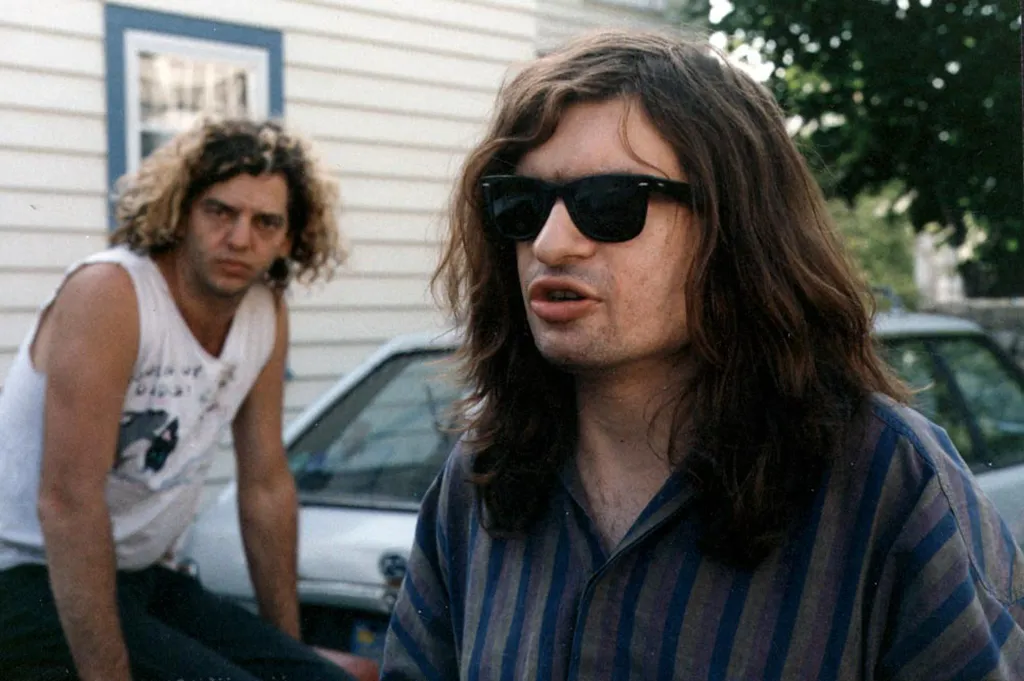
A New York punk scene legend was killed by a mail truck while walking home after performing at an East Village watering hole on Friday night.
Chester “Chet” Mazur was a “torchbearer for sleaze rock,” one friend said, a staple of an ‘80s and ‘90s underground music scene laden with black leather, late-night pierogi and the camaraderie of penniless performers. At 66, he was still playing alongside his band, The Rasslers, in downtown dives until the day he died.
James Simmons, 61, was charged with leaving the scene of a fatal accident, according to the NYPD. Mazur had finished playing a set at Otto’s Shrunken Head, a tiki bar on East 14th Street, early Saturday and was a block away from his Hell’s Kitchen apartment when he was struck by the mail truck. When the identity of the victim was discovered, punk rockers flooded social media to commemorate Mazur’s legacy.
Dave Giffen, a guitarist for the rock band Alice Donut and executive director of the Coalition for the Homeless, retold a running joke among Mazur’s friends: If you ever wanted to find him, you could just “walk into any of the the cool dive bars in New York City and ask who’s seen Chet, and invariably somebody in the room would be like, yeah, I just saw him.”
Mazur, a native of Buffalo, first experienced notoriety as a Columbia University undergraduate. He scored an A on a paper about a Rolling Stones album — in a class known for an instructor who refused to give A’s. Giffen, a fellow student, heard about the paper and got to know Mazur. Soon, he began working as Alice Donut’s road manager.
“He didn’t have a driver’s license, didn’t have great vision, was not really great with money, but was such an interesting and lively conversationalist that when you’re on a 14-hour drive, Chet is who you want in shotgun,” Giffen told The City Reporter on Monday. (He’d just gotten off the phone with Dead Kennedys frontman Jello Biafra to tell him the news.)
When the band didn’t have money to book hotels while on tour, Mazur would chat people up in the crowd, scoring couches for the team to crash on, Giffen said.

Richard Marshall, a member of Alice Donut in the early ‘90s, recalled Mazur’s bizarre performance art, which he unleashed on the audience as the band’s opening act.
“He was this character who kept trying to take his own life and failing at it, and the piece was full of a lot of philosophizing about that experience, and I thought it was absolutely brilliant. I thought it was genius, actually,” Marshall said in an interview. “He got booed on occasion, but some of the audiences absolutely loved it.”
Eileen Connelly, a member of the all-girls rock band Thrust, which was active in the early ‘90s, remained friends with Mazur for decades after he served as an on-stage dancer for her concerts. He had a crush on one of the band members, she said, and was more than willing to participate. But aside from his often eccentric and hardly-ever family-friendly performances, she said, Mazur was “highly intellectual.”
With his distinctive nose and grimy t-shirts, Connelly and her friends were “pretty sure” that Mazur was the inspiration for Butthead from the ‘90s animated hit “Beavis and Butthead.” (A representative for “Beavis and Butthead” creator Mike Judge couldn’t immediately be reached for comment.)
Tallahassee Throwdown
Mazur went through life working odd jobs, making art, and saying yes to just about everything, friends told The City Reporter. In the last years of his life, he’d secured an apartment on West 55th Street and a civil service job, which he called “meaningful” but boring because it wasn’t music, his niece, Mary Mazur, told The City Reporter.
Several members of Alice Donut recalled an afterparty in Tallahassee, Florida, that turned into a brawl, and how Mazur stepped in to protect the band when the cops were called.
“They said, ‘Give us some ID.’ And the only piece of ID he had was a New York City public library card that had been burnt in half because his apartment had just had a fire, and he was, I think, in fact, homeless at that point,” Giffen said.
Michael Jung, another guitarist for Alice Donut, added that Mazur tried a “Homer Simpson-style” retreat into the bushes after giving the cops his charred library card.
“He was one of the sweetest, kindest, gentlest people I’ve ever known,” Marshall, who stayed in touch with Mazur for more than 40 years, said. “Aside from all his artistic and cultural contributions, he was just a sweet, caring, thoughtful, loving human being.”
Mazur, was always “on the margins” of New York City, Giffen added. A memorial for the punk rocker is in the works, but until then, the sticky walls of East Village dive bars hold onto decades of his friendship, stories, songs and monologues.
Our nonprofit newsroom relies on donations from readers to sustain our local reporting and keep it free for all New Yorkers. Donate to THE CITY today.
The post Stunned Friends Remember an East Village ‘Torchbearer for Sleaze Rock’ appeared first on The City Reporter.
