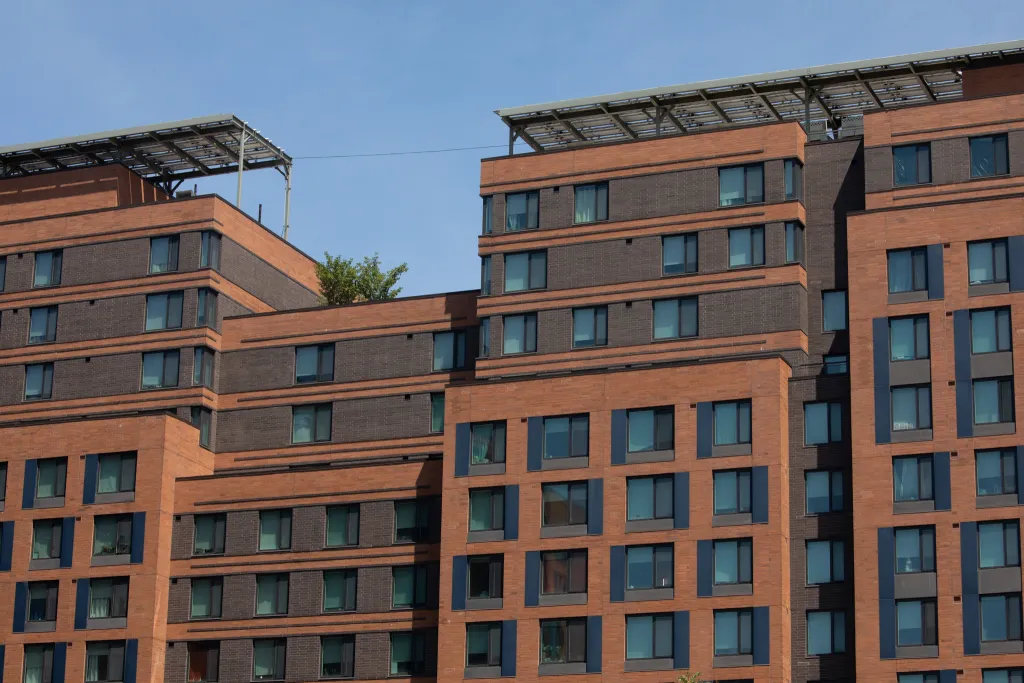
As New Yorkers contend with rising utility bills, battling those costs is becoming a focus for Mayor Zohran Mamdani as his administration prioritizes tenant protection and affordability.
The city launched a survey this summer to understand the experiences of New York tenants who pay for their heat and air conditioning. Mamdani appointed a public utility advocate in his office to press for lower energy bills. And many tenants at the mayor’s “Rental Ripoff” hearings earlier this year mentioned to city officials they received surprise utility bills that further squeezed their wallets, according to an official report.
Cea Weaver, director of the Mayor’s Office to Protect Tenants, who attended the hearings, said learning about the variation in tenants’ utility costs was particularly eye-opening.
“There’s a reality of looking for an apartment in New York City, that if you find one you can afford, you’re going to take it, and you may not know that later on, during the winter, the electric bill is going to be much higher,” Weaver told reporters in July. “I think there’s some really important transparency things that we can do in the short term to address that problem while we also balance the real need to do climate adaptation in our city’s aging housing stock.”
The moves come as prices for heat and cooling increase and more New York City buildings shift toward electricity and away from oil and gas. They also raise questions about the limits of what city government can do to rein in utility costs.
Hefty utility bills threaten housing affordability for tenants of all stripes, with the lowest-income New Yorkers especially at risk. Heating bills spiked for customers last winter, as The City Reporter covered. Demand and prices for gas rose, and heating appliances had to work harder to heat homes in freezing temperatures.

Meanwhile, climate-friendly policies to incentivize installing electric heating in new buildings can push the costs onto apartment-dwellers. In older buildings with a central boiler system, the landlord usually pays for heat. But electrified heating systems can include separate meters for each apartment, making households responsible for their heating bills.
That can come as a surprise to many city tenants, as it did to Jen Wu.
Five years ago, she moved to a Harlem apartment with an electric heating system. She said her one-bedroom is not well-insulated and the heating system is inefficient.
Wu’s winter electric bills hover around $400 per month, which she credits to using a space heater rather than the built-in system. She said she’s heard from neighbors whose bills have been much higher.
“All winter, I’m chronically underheated because I can’t afford it, and it’s extremely stressful,” Wu said. “It’s been really hard, but everything else about this apartment is so right for me.”
Wu said she loves the neighborhood and worked hard to create a peaceful, plant-filled environment for herself and her partner.
An ‘Emerging Issue’
Most New York City households are rent-burdened, meaning they pay more than 30% of their income on rent and utilities. Higher utility bills could send more households into this threshold — and many residents already struggle on that front.
Nearly 400,000 Con Edison customers are at least 60 days behind on bills, amounting to more than $891 million in arrears, according to data submitted to the state.
Andrew Stern, a spokesperson for the city’s Department of Housing Preservation and Development, said the agency is concerned about rising electric bills as more heating systems go electric.
“That’s why HPD launched our recent heating survey: to understand who is paying for heat, how much they’re paying and why,” he said. “These answers are critical to developing a comprehensive response to this emerging issue.”
The department already has policies in place to mitigate utility costs for tenants in buildings it subsidizes. Those policies limit use of older, less efficient electric heating systems and direct landlords to pay for heating in some instances.
Rent-stabilized tenants whose landlords pass heating costs to them — such as when they change the heating system — may be eligible for rent reductions. But for market-rate tenants, there are few regulations.
Paying for heat is costly for landlords, too. Fuel costs for owners of rent-stabilized apartments increased 11% between 2025 and 2026, according to research by the city’s Rent Guidelines Board — the largest driver of an overall increase in expenses.
Mamdani’s newly appointed public utility advocate, Annel Hernandez, said her priorities include getting utility companies to enroll more customers in energy affordability programs and making sure New Yorkers understand their energy bills.
“We will continue to coordinate with our partners to accomplish these goals because no one in our city should struggle alone with the stress and burden of rising utility bills,” she said in a statement.
Still, several factors contributing to higher utility costs are outside the city’s control, such as whether the state will greenlight rate hikes for Con Ed customers.
The state has consistently greenlit those hikes, including a recent 9% increase over three years.
Electrification Costs
Electrification — transitioning from gas stoves to induction, or from boilers to heat pumps — brings local air quality benefits and reduces planet-warming emissions from burning fossil fuels. It’s a way to fight climate change.
“The city’s switch to electrification is to improve air quality and improve the residents’ experience inside buildings,” said Anhthu Hoang, deputy director of the nonprofit WE ACT for Environmental Justice. “Affordability is not just about money — it’s about your health and wellbeing.”
But environmental and housing advocates often emphasize the need to electrify buildings in a way that protects tenants’ wallets.
Several local laws, including one requiring new buildings to contain only electric appliances and another limiting how much carbon large buildings can emit, have influenced the spread of electric appliances.
Francis Rodriguez, director of weatherization at the Bronx-based Association for Energy Affordability, said some of the state’s financial incentives for electrification prohibit landlords from passing heating costs onto tenants.
“Mandating that you don’t switch the cost from the building owner to the tenant is a good protection,” he said.
Electric heating systems vary in efficiency. Heat pumps, for instance, are more efficient than electric baseboard heating.
Tenants in a Crown Heights building experienced the difference firsthand. Over two winters, they went on a partial rent strike, citing inadequate heat from electric wall units as well as the resulting high energy bills from the inefficient appliances and space heaters they used as a supplement.
The landlord and building management first replaced those systems with electric baseboard heating and eventually agreed to install heat pumps. That made the residents more comfortable and lowered their bills.
“They’re way more reasonable,” said Eric Thurm, one of the tenants. “I think everybody feels like the building is a lot more habitable now and [feels] less terrified in the winter.”
Thurm, 34, said the electric bill for his two-bedroom was around $1,000 for the month between December 2024 and January 2025, but a year later, the bill came to about $300 with new heat pumps.
Our nonprofit newsroom relies on donations from readers to sustain our local reporting and keep it free for all New Yorkers. Donate to THE CITY today.
The post Mamdani’s Latest Focus for Tenants? Sky-High Utility Bills. appeared first on The City Reporter.
