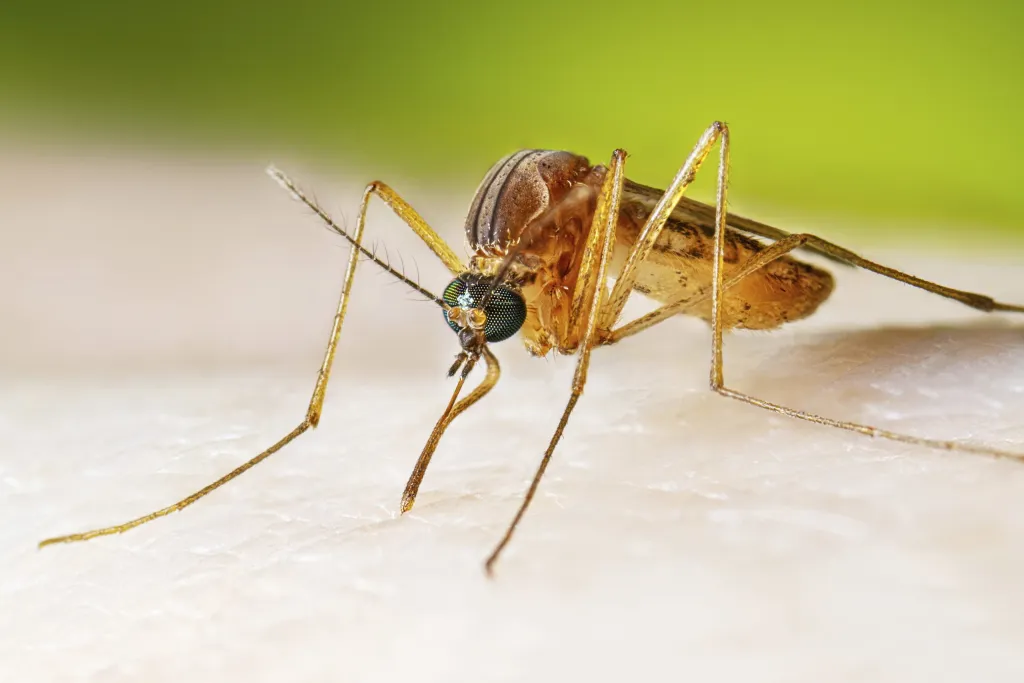
City health officials have detected nearly twice as many mosquito samples with West Nile virus so far this year compared to the same time last year, the health department warned this week — though there haven’t been any reports of New Yorkers testing positive for the mosquito-borne disease as yet.
The health department had identified 612 West Nile-positive samples from 2,040 mosquito pools tested citywide this year through July 25 — an 88% increase from the 326 positive pools through the same time in 2025, according to figures the department released Thursday.
The number of positive pools rose to 850 on Friday, according to the latest city data, with samples from Queens accounting for more than 43% of all positive detections and those from Staten Island accounting for another 33%. Officials didn’t immediately say how that number compares to this point last year.
The surge in West Nile virus among mosquitoes in the city mirrors a broader increase across the country, according to the U.S. Centers for Disease Control and Prevention. Nationally, more than 140 people have tested positive for the virus so far this year, with about half of them in Arizona.

“We have had two heat waves, so that created a perfect condition for the virus to amplify and spread,” Shamim Riaj, who helps lead a 14-person health department division that monitors disease-spreading mosquitoes and ticks, told The City Reporter.
Operations to manage the virus’ threat generally start to intensify in April, Riaj added, as mosquito activity crescendoes throughout the summer with the humid, subtropical climate, peaking in August and September.
“When it rains, it creates conditions for standing water everywhere, so it’s the perfect place for mosquitoes to go and lay eggs and to probably start to grow,” he explained. “Then let’s say the sun comes out and then there’s no rain for a week or two, it’s perfect breeding conditions for mosquitoes.”
Here are five key things to know about the West Nile virus and how the city combats it.
Jump To …

What Is West Nile Virus?
The virus is primarily hosted by birds, but can spread to people when mosquitoes contract it by biting an infected bird and then a person.
The first West Nile outbreak in the United States took place in New York City in 1999, and the virus has been detected in city mosquitoes every year since. To date, it remains the only mosquito-borne disease known to infect humans across the five boroughs, according to the health department.
Most people who contract the virus are asymptomatic, though approximately one in five people experience a mild illness that can include fever, headache, fatigue and nausea. In rare cases, the virus can also cause severe neurological illness.
Adults 60 and older are at the greatest risk of severe illness from the virus, health officials say.
People are generally considered “dead-end” hosts of the virus, as person-to-person transmission has been documented only in rare cases as a result of blood transfusion, organ donation or breastfeeding, according to the CDC.
How Does the City Detect West Nile-Positive Mosquitoes?
The health department has conducted routine surveillance of mosquitoes to mitigate West Nile virus since it was first detected in the city in 1999. Workers set up 53 traps across the city twice a week to collect mosquito samples.
“When you want to pick it up, oh my God, it gets all over you,” said Zurina Yusoff, a health department vector ecologist. “Sometimes the net protects you, but I just pray.”

Those mosquitoes are killed on dried ice upon collection, then sent to a lab where species are identified under a microscope. Then, they’re tested for West Nile virus.
To monitor viral activity, the health department focuses mainly on two of the 51 mosquitos species present in New York City: the golden-bodied Culex pipiens and the stripped “Asian tiger,” an aggressive species native to Southeast Asia.
“Compared to when I came here in 1996, there are definitely more mosquitoes, more mosquito bites,” said Riaj, a native of Bangladesh. “Let’s talk about the Asian Tiger. I did not see any Asian Tigers back then working in the neighborhoods, in the parks. Now they’re everywhere.”
Where in the City Have West Nile-Positive Mosquitoes Been Detected?
Infected mosquitoes have been found in every borough, but especially Queens and Staten Island.

What Does the Health Department Do To Combat the Virus?
The health department addresses West Nile virus primarily in two ways:
- Applying eco-friendly biological insecticides to nonresidential marshes, wetlands and natural mosquito-breeding habitats via helicopter to minimize larvae before they become biting adults.
- Conducting pesticide-spraying operations via trucks in neighborhoods where West Nile-positive mosquitoes have been identified.
“Something people don’t always understand when they stop us on the street is that we don’t just spray a neighborhood for nuisance mosquitoes,” said John Zuzworsky, a health department vector ecologist. “Our spray criteria is two consecutive pools of West Nile virus, with high numbers of biting mosquitoes. It’s not just random.”
Since July, the health department has conducted four mosquito-control operations, including aerial larviciding in four boroughs, as well as truck-spraying in Queens and Staten Island, most recently on Wednesday.
“These operations typically reduce adult mosquito populations by about 70% and decrease West Nile virus-positive mosquito pools by more than 85%,” the health department said in a press release Thursday.
Truck-spraying operations can last more than nine hours, between 8:30 p.m. and 6 a.m. Pickup trucks crawl from block to block at up to 12 mph, spewing plumes of pesticides as wide as the truck from a diffuser at the tail. An escort vehicle leading the way serves as a navigator for the spraying truck, blasting a message through a pair of speakers warning residents to go indoors, nonstop, on a loop — up to 3,200 times by the end of the night.
Spraying vehicles are also programmed to beep and alert exterminators when they approach natural water areas so they don’t contaminate water and harm aquatic life, Yusoff said.
Finally, health department inspectors respond to 311 complaints about standing water — breeding grounds for mosquitoes — and issue tickets for violations when necessary.

What Precautions Should I Take?
Riaj recommended homeowners reduce any standing water on their properties to avoid creating breeding grounds for mosquitoes. Birdbaths and plant saucers are common sources of standing water, he said.
The health department has also advised New Yorkers to empty standing water at least once a week from buckets, flowerpots, children’s toys, traps and clogged gutters.
Mosquitoes that transmit West Nile virus are particularly active at dawn and dusk and after dark — so you can avoid going outdoors at those times during mosquito season if you’re worried about getting bitten.
“If you’re coming out and planning to stay outside longer, try to wear full sleeve clothes and pants, try to wear mosquito repellent,” Riaj said. “That’s the best advice I can give you.”
Our nonprofit newsroom relies on donations from readers to sustain our local reporting and keep it free for all New Yorkers. Donate to THE CITY today.
The post 5 Things To Know About NYC’s Surge in Mosquitoes With West Nile Virus appeared first on The City Reporter.
