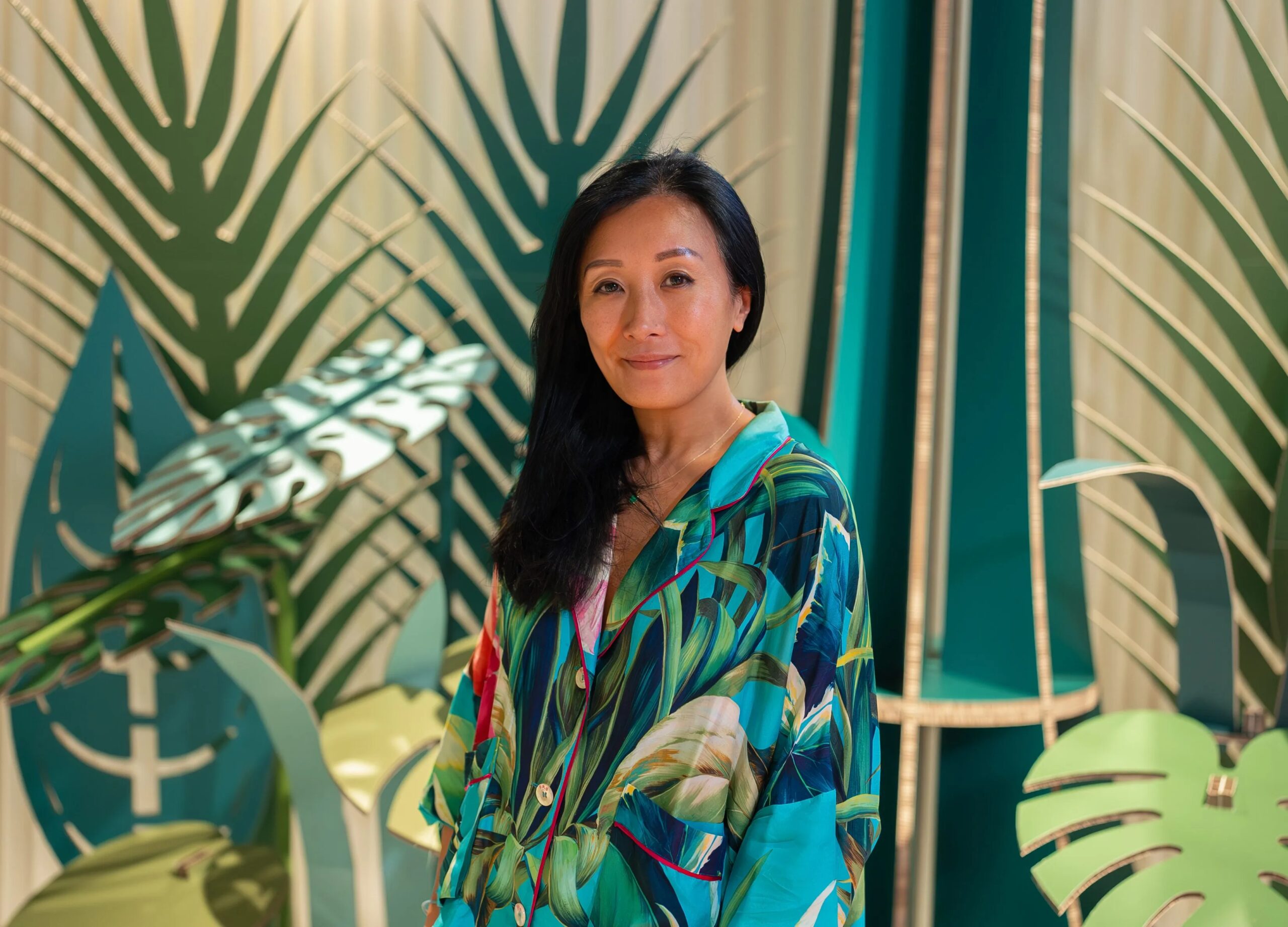
Artist Anita Lam didn’t got down to reinvent the zoo, however after studying John Berger’s Why Have a look at Animals?, she discovered herself rethinking the enjoyment they’d as soon as introduced her. Questions started to take form in her thoughts: What does it imply to restrict an animal for human spectatorship? What do our constructions of show say about how we view different species and ourselves? These and different inquiries ultimately gave rise to “Completely happy Zoo,” a conceptual artwork collection developed via ALAN (Artists who Love Animals and Nature), the Hong Kong–primarily based nonprofit Lam co-founded and now directs.
There aren’t any cages in Lam’s zoo. No bars or obstacles between ‘us’ and ‘them’. And no dwelling creatures on show. As an alternative, every iteration of the adaptive multimedia xhibition—”BLUTOPIA” in 2023, “Spirit of Sumatra” in 2024, “Wild Togetherland” at the moment on view at GATE33 Gallery in Hong Kong and “Snowmelt,” which is in improvement—exists to ask empathy with animals in nature and in human-built environments. On the coronary heart of “Wild Togetherland” is an intriguing query: The place do we belong within the ecosystem of a metropolis?
Lam’s work sits on the intersection of artwork, ecology, know-how and philosophy, however removed from being overly educational or depressingly pessimistic—as environmentally targeted artwork reveals typically are—her strategy is playful and, at occasions, mischievous. Collaborating with artists like Ruby Maky, Stickyline and Carnovsky (Francesco Rugi and Silvia Quintanilla), she builds exhibitions that embody every little thing from immersive installations and playable video video games to sculpture and interactive works.

There aren’t any dry manifestos printed on the partitions, no proclamations of doom. She’s not right here to scold or convert. As an alternative, “Completely happy Zoo” nudges guests towards ecological consciousness via whimsy, novelty and play as a result of, for Lam, emotional connection is step one towards behavioral change. In “Wild Togetherland,” tales of city animals pushed to the margins of human life illustrate how folks may higher coexist with different species, and plenty of works within the exhibition—together with The Collective’s interactive sport Rest room Coaching and Stickyline’s City Animal Fables—use humor to reveal the absurdity of anticipating animals to evolve to human-imposed order. Observer caught up with Lam to be taught extra concerning the exhibition, how “Completely happy Zoo” has advanced and why discovering frequent floor with animals issues now greater than ever.
ALAN stands for “Artists who Love Animals and Nature.” Broadly, what accountability do you’re feeling artists bear in relation to environmental points?
I feel being environmentally aware is one thing all of us share accountability for—it’s not only one group or career. That mentioned, artists have a particular position to play. We’re naturally expressive, and we inform tales via what we create. There’s typically a whole lot of emotion, experiences and heat in artwork, and that makes it a strong solution to join with folks. Reasonably than telling the general public what they need to or shouldn’t do, artwork opens up house for reflection. It invitations curiosity and encourages folks to assume for themselves. When somebody feels emotionally linked, understanding grows naturally, and from that place, folks could make their very own decisions.
Environmental points are complicated, and there isn’t one proper solution to strategy them. Artwork permits us to discover these complexities, to assume otherwise and to think about new potentialities. At its coronary heart, it’s about creativity—about stepping exterior the same old frameworks and providing room for thought, dialogue and alter.
What impressed the “Completely happy Zoo” exhibition collection?
Each Andy, the co-founder of ALAN and I’ve all the time beloved animals. Rising up, we spent a whole lot of blissful time in zoos and aquariums—it was our approach of feeling near them. These locations are full of childhood recollections, household outings and a way of marvel, so it’s not simple to all of a sudden query that have.
A turning level for me was studying Why Have a look at Animals? by John Berger. One line actually stayed with me: “In every single place animals disappear. In zoos, they represent the dwelling monument to their very own disappearance.” It made me pause and see zoos from a totally completely different perspective. It wasn’t about rejecting these recollections, however about questioning how our tradition, our values and our relationship with animals have been formed over time. At its core, it grew to become a mirrored image on humanity itself.
I began to see our relationship with animals as a place to begin—a lens via which we might look extra deeply into humanity and into the extra philosophical facets of how human nature and improvement are linked. That’s when a easy however difficult query started to type in my thoughts: can we reimagine the way forward for a zoo?
Then the pandemic occurred, and it grew to become a shared international expertise of confinement. Many individuals struggled mentally and emotionally, and for the primary time, we might really really feel what captivity is like. On the similar time, nature started to get better as human exercise slowed down. That distinction stayed with us. It felt like an vital second to replicate and maybe the best time to introduce “Completely happy Zoo.”
“Completely happy Zoo” isn’t about copying a conventional zoo or recreating nature via know-how. As an alternative, we use artwork and interactive know-how to discover new methods of reconnecting people and nature—via emotion, creativeness and curiosity. It’s about asking questions reasonably than providing mounted solutions. Hong Kong is a small metropolis, and land is all the time restricted. So as an alternative of constructing an enormous zoo, we strategy “Completely happy Zoo” one chapter at a time, every specializing in completely different themes and concepts. This fashion of working has introduced surprising advantages—it makes the mission extra versatile, scalable and adaptable to completely different cities and communities, whereas permitting us to continue learning as we go.
That is the third installment within the collection. How has the imaginative and prescient advanced because the first present, and what new territory are you exploring with “Wild Togetherland”?
The primary two chapters have been extra geographically grounded—one targeted on the ocean, the opposite on the rainforest. They allowed us to discover particular ecosystems and the wonder and fragility inside them. As we started shaping this new chapter, we paused and requested ourselves: if we’re creating this journey from scratch, why ought to we observe the structure or logic of a conventional zoo in any respect? That query opened up new instructions. We began trying towards extra complicated and generally uncomfortable subjects—ones that really feel a lot nearer to our on a regular basis lives.
“Wild Togetherland” focuses on wildlife within the metropolis. It’s a worldwide difficulty, nevertheless it performs out domestically, otherwise in each place. As cities proceed to develop, encounters between people and wildlife change into extra frequent. Typically these encounters are lovely, however extra typically, they flip into battle. This led us to assume extra deeply about energy and imbalance within the societies we share—who holds house, who’s given a voice, who is taken into account a minority and who’s silenced.
City wildlife turns into a quiet mirror. It gently asks us to replicate on our position on this shared atmosphere—who we’re at the moment and who we wish to be going ahead. “Wild Togetherland” is just not meant to present solutions, however to supply a shared house: a spot to shift perspective, to begin conversations or just to spend time and expertise the work.

Lots of the works use play, absurdity and silliness to impress reflection. Why do you’re feeling it’s vital to strike a steadiness between humor or pleasure and urgency when addressing critical environmental themes?
We’re very conscious that the world already feels heavy. Many individuals are overwhelmed by each day pressures, fixed data and ongoing crises. In that context, we see humor as an invite. One thing gentle can open a door the place one thing critical may push folks away—particularly when the subject itself carries weight.
For us, laughter is a approach to attract folks in, absurdity sparks curiosity and makes house for engagement. As soon as curiosity is there, folks typically wish to look nearer, ask questions and stick with the work somewhat longer. Staying curious retains us open and alive. That sense of play and openness sits on the core of our artistic strategy.
Can discovering empathy with animals inside ourselves reframe how we relate to one another as people?
That’s a extremely vital query, and in some ways it goes straight to the center of what “Completely happy Zoo” is about. I typically consider a quote by Gandhi: “The greatness of a nation and its ethical progress may be judged by the way in which its animals are handled.” Animals are the silent majority, and the way in which we share this planet with them turns into a mirror of how we perform as a society. People have formed many of the world into cities. Many wild animals merely can’t adapt to those environments—simply as most people couldn’t survive within the wild. In that sense, animals signify these with much less energy in a shared system, whereas people have change into the highly effective minority on this planet. Life has by no means been utterly honest or equal and perhaps it by no means might be—however it may be extra simply.
After we lose consciousness of those energy dynamics, particularly as we redesign the world to be more and more human-centric, it raises deeper questions. Are we unknowingly accepting a system the place solely the strongest or most adaptable get to thrive? This sort of mindfulness doesn’t solely apply to how we deal with animals—it displays how we relate to at least one one other as people as effectively.
As know-how continues to advance, empathy turns into much more important. Data and know-how aren’t the issue; they’re instruments. What really issues is how we select to make use of them and that requires consciousness. With A.I. creating at a pace we’ve by no means skilled earlier than, its potential to assist or to hurt is immense. With out empathy, it’s simple to slowly lose consciousness—like frogs in warming
For me, empathy and consciousness aren’t summary concepts; they’re core human values. If we wish to maintain ourselves—not simply as people, however as a society—we have to actively maintain on to them. Discovering empathy with animals could also be one of the vital sincere methods to remind ourselves methods to take care of one another.
How did you choose the taking part artists and collectives? Was there a guideline or shared ethos that tied them collectively?
Every chapter begins with a transparent theme, which provides us an general construction and sense of course. Inside that framework, we search for artists with distinct voices, practices and methods of pondering. Reasonably than asking them to suit into a hard and fast format, we would like their individuality to come back via—whereas nonetheless sharing a typical tone that feels playful, open and welcoming. The one actual consideration in our collaborations is kind of easy and actually not tough to fulfill: that an artist’s previous work doesn’t contain hurt or abuse towards animals or others. Ideally, they’ve a pure sensitivity towards animals and nature—nevertheless it’s not about whether or not they love animals. For us, it’s actually about respect.
With that in thoughts, it’s been very significant to listen to guests describe our journeys as having heat—having a type of “temperature.” Not simply depth or essential pondering, however one thing that feels human and emotionally current. We frequently consider the method like cooking. Every artist is an ingredient, bringing their very own taste and character. Our position as curators is like that of a chef—to not masks these flavors, however to know how they work collectively. When the steadiness feels proper, every paintings can stand by itself, but one thing new emerges once they’re skilled collectively.
For instance, our fourth chapter, “Snowmelt,” is an immersive theatrical circus journey premiering this April. It’s a performance-based expertise created in collaboration with acrobats from completely different disciplines, exploring concepts of resilience and agility in nature. Simply as nature develops its personal “superpowers” to outlive crises and alter, we imagine people do too. Every of us carries hidden strengths that assist us adapt to surprising challenges. The aim isn’t uniformity, however chemistry. When the works start to talk to at least one one other, they type a layered journey—one which feels cohesive, whereas nonetheless honoring the richness of every particular person voice.
Have you ever introduced or would you take into account bringing the “Completely happy Zoo” collection to different city geographies?
Sure. Completely. Bringing “Completely happy Zoo” to different cities could be very a lot our long-term imaginative and prescient. Virtually each metropolis on the planet has its personal zoo or aquarium, and in a approach, that shared construction grew to become our start line for imagining how “Completely happy Zoo” might journey. Whereas the themes we discover are international, each metropolis carries its personal context, challenges and relationship with nature. That’s why native collaboration is vital to us—as an added layer to our present content material. By working with native artists, collectives and communities, every chapter is enriched with new views and might reply extra on to its environment, making the expertise really feel grounded, related and linked to position reasonably than merely transplanted.
In a way, it’s a reversal of the normal zoo mannequin. As an alternative of transferring animals throughout borders, we invite concepts, tales and artworks to journey. Via artwork, we create a type of cultural trade—one which celebrates variety with out captivity. Every metropolis provides a brand new layer to the mission, widening the spectrum and enriching the general journey. If performed effectively, “Completely happy Zoo” doesn’t simply arrive in a metropolis—it grows with it.
What recommendation would you give to younger artists who wish to have interaction with conservation however aren’t positive methods to start?
First, I actually imagine it begins with discovering what you genuinely care about. Discover the subject that strikes you—one thing that feels truthful to your personal expertise and values. With out that connection, the work can simply change into hole. I as soon as had an artist pal who mentioned he doesn’t like seeing college students make artwork about sustainability just because it feels “right” or earns them extra recognition. Usually, you may sense when there’s no actual coronary heart in it, and I feel that’s very true.
What’s the purpose of making work solely to match what society expects or to gather approval if there’s no ardour behind it? Artwork, at its greatest, ought to problem norms and shift views. I typically inform my group that individuals can really feel the distinction—they will sense whether or not a piece comes from the center or is created simply to exist. To actually have interaction with conservation, it’s important to care sufficient to watch deeply, to query and to know earlier than responding. From that place, you may increase significant questions or provide new views, reasonably than merely repeating messages or creating one thing that seems like propaganda. Most of us already know, for instance, that utilizing plastic is dangerous—however the actual query is why and what complexities sit beneath that reality. There are all the time a number of sides to each story.
I additionally assume this is applicable past conservation. Personally, whereas I care deeply concerning the pure world, I’m equally all in favour of exploring themes like energy, bullying and politics inside company tradition—questions equivalent to why “winners take all of it.” These pursuits come instantly from lived expertise, and so they form how I feel and create. For me, honesty in subject material all the time comes earlier than selecting a “right” matter. With out real care and curiosity, the work dangers changing into superficial—and audiences can really feel that instantly. Ardour isn’t simply an added bonus; it’s the muse.
Extra Arts Interviews

