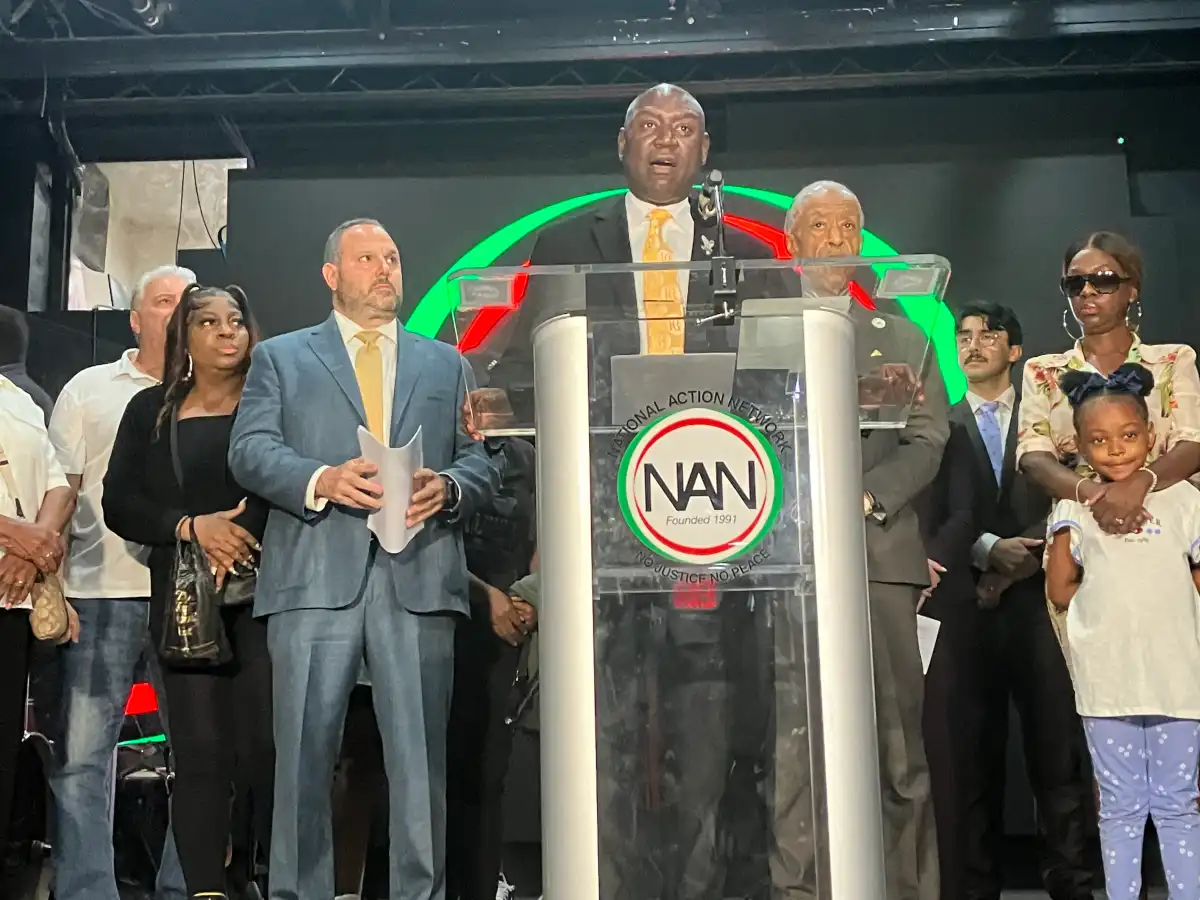
Those sickened by last summer’s Legionnaires’ disease outbreak in Harlem have filed three lawsuits against the city. They are seeking hundreds of millions of dollars over claims that the city government was negligent in its handling of the public health crisis just days after the bacteria gripped the neighborhood again this year.
Approximately 41 people have signed onto the first set of suits the city’s been hit with over last year’s Legionnaires’ disease outbreak, which sickened at least 118 and killed seven people across July and August 2025, with a pneumonia-type disease that gives people severe flu-like symptoms.
Legionella bacteria grow and spread through warm water droplets, and last year’s outbreak was linked to cooling towers in the neighborhood, including those at Harlem Hospital and a New York City Public Health Lab. Reports showed that the bacteria in those towers had the same genetic makeup as those that sickened people.
Families of those who died and people sickened allege the city and a group of construction companies failed to properly test, treat, and maintain the cooling towers, failed to comply with state and city cooling tower regulations and failed to warn the public of the danger in their suits.
“These entities that we are suing today all had a responsibility to ensure that the cooling towers and water systems did not harbor legionella bacteria,” said attorney Ben Crump, who’s representing the Legionnaires’ victims in Manhattan Supreme Court Thursday. “[The city’s] failures and negligence are the reasons our clients have suffered so greatly, many of whom died.”
Crump, a high-profile civil rights attorney known for representing families of George Floyd and Breonna Taylor in their police brutality suits, called on Mayor Zohran Mamdani to “make the situation right,” ensure those impacted get justice, and that these outbreaks stop happening in Harlem.
“While we applaud Mayor Mamdani’s expeditious efforts to address and stop Legionnaires’ outbreak in the Upper East Side just last month, we urge the city to properly resolve this matter with these families,” Crump said. “These are people who were injured or killed as a result of this negligence, and the survivors and the families of the deceased deserve to have this matter resolved.”
When asked for comment, the mayor’s office deferred to the city’s Law Department, which said it will “carefully review” the suits and that “protecting public health and safety is at the center of the city’s response.”
Litigants say city deprived Harlem of resources to fight Legionnaires’
Attorneys and the victims they represent — who have filed personal injury, emotional distress, economic loss, and wrongful death claims against the city — allege that Harlem doesn’t get enough care and attention from the city, which results in these repeated outbreaks.
“We’re here today telling people that Harlem should never get less than it should get everything that everybody else gets,” Crump said. “We don’t want the city to delay this matter. We don’t want anybody to ever sweep the lives of the citizens of Harlem under the rug.”
“Public health safeguards exist for a reason, and when they are not followed, families, workers, and entire communities bear the consequences,” the attorney continued. “Accountability is essential, not only to provide justice for those who are harmed, but to ensure that a tragedy like this never happens in Harlem or anywhere else in New York in the future.”
Those impacted emphasized that the result of the carelessness they accuse the city of engaging in isn’t just statistics: It’s the loss of life in their community that’s hard-felt.
Lakisha Plowden, who lost her fiancé Bruce Scott, said her six-year-old daughter Brooke won’t let Plowden out of her sight. That’s because Scott left Brooke’s sight last year to go to the hospital, and never returned home, Plowden said.
“For me, it’s very hard because [of that],” Plowden said. “And, I’m a single mother now. We don’t have her best friend, and we don’t have my soulmate anymore.”
She’s part of the group suing the city over wrongful death claims. There’s also an aunt suing over the wrongful death of her nephew and a goddaughter suing over her godmother’s death.
Nunzio Quinto, a construction worker who says he caught Legionnaires’ disease while on the job in the area last year, said the sickness forced him to retire, as it left him so weakened he wasn’t able to return to work.
“I find it disheartening that after I was diagnosed with Legionnaires’, my coworkers were not notified,” Quinto said. “Evidently, neither were the people in the neighborhood that lived there. They were also in danger.”
Attorneys said they expect to file claims over damages for at least seven more people from last year’s outbreak in the coming months. They filed a separate set of suits against private buildings and contractors last August, but needed to conduct longer investigations in order to bring suits against the city.
Attorneys from the firm Weitz & Luxenberg, who are working on the case alongside Crump, added that they believe there could be valid suits related to this year’s outbreak as well.
This year’s Legionnaire’s disease outbreak, also concentrated in Harlem and the Upper East Side, sickened over 90 people and is linked to at least seven deaths. The city declared the outbreak over on July 25, though a few people were still hospitalized at that point.
Reports found that cooling towers were to blame for this year’s outbreak as well, and that a slew of them hadn’t been tested and treated for the bacteria as frequently as they should have been.
City Council Speaker Julie Menin has announced a September oversight hearing on the outbreak and cooling tower management.
