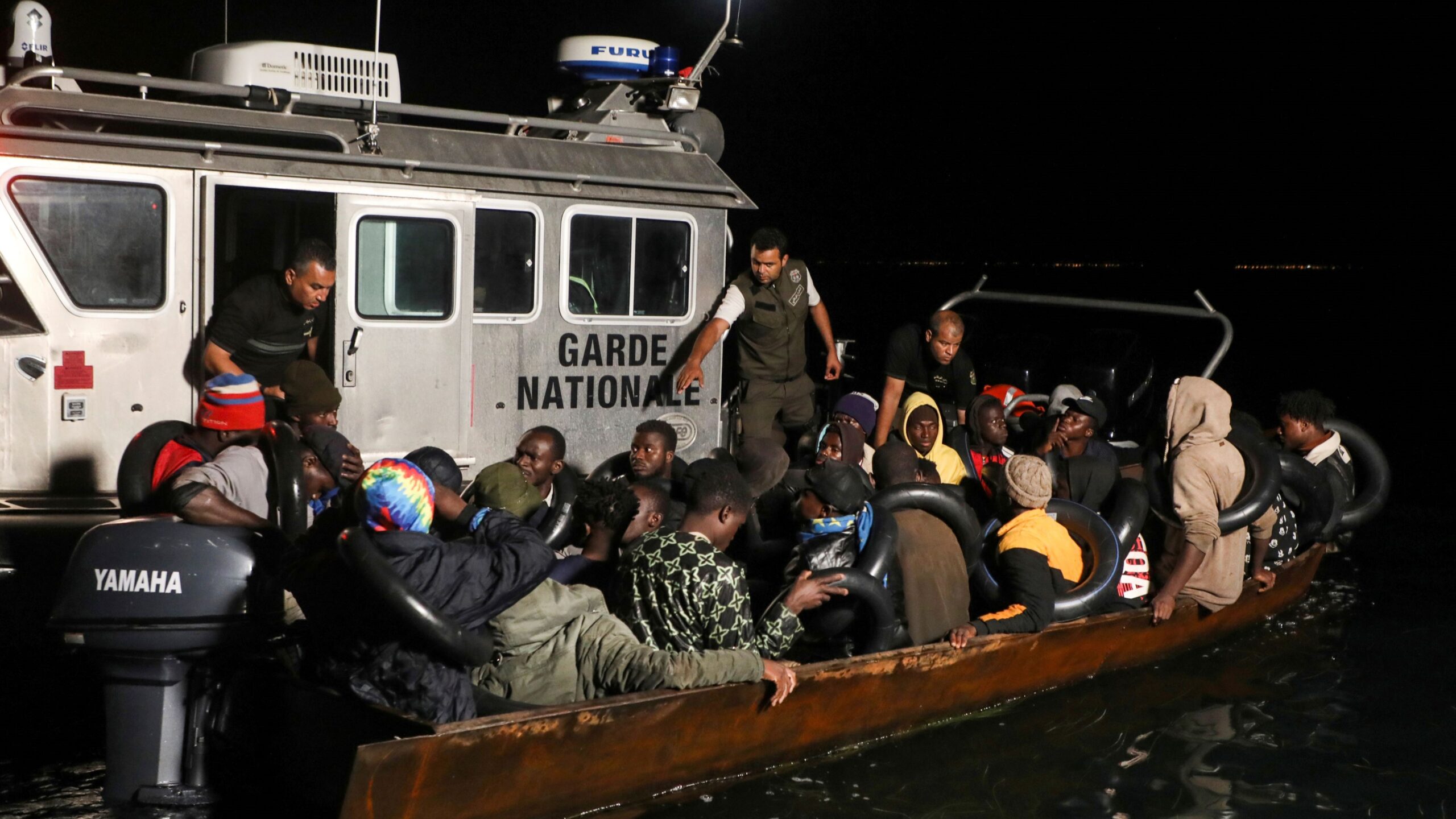
The global situation for migrants in 2025 is precarious at best. In Western destination countries, anti-migrant and xenophobic governments are gaining strength. In transit countries, particularly the southern Mediterranean, governments are doing Europe’s bidding and either deporting or mistreating migrants seeking to make their way to Europe. The result is an untenable—and ineffective—model of migration management. Perhaps nowhere is this more obvious than in Tunisia, currently the main launch point for third-country migrants transiting the continent as well as citizens attempting to flee growing repression at home.
Migrants leaving Tunisia for Europe, traveling what is known as the Central Mediterranean Route, fall into three categories: non-Tunisians (primarily sub-Saharan Africans) transiting or trying to transit Tunisia; Tunisians leaving through regular channels; and Tunisians leaving through irregular channels. Most global attention is devoted the first category.
According to Tunisian official statistics, the number of irregular migrants reaching Europe from Tunisia fell dramatically in 2024 to 19,245—down from 97,667 in 2023. According to Frontex, the European Border and Coast Guard Agency, 7,679—or roughly 40 percent—of 2024 arrivals were Tunisians. But this decline in arrivals does not mean the problem has been solved. In addition to the nearly 20,000 who made it to Europe, another 80,000 irregular migrants were intercepted in the waters between Tunisia and Italy (an increase from around 70,000 in 2023 and 31,000 in 2022) and hundreds more drowned. The International Organization for Migration has called the Central Mediterranean Route the “deadliest known migration route in the world.”
