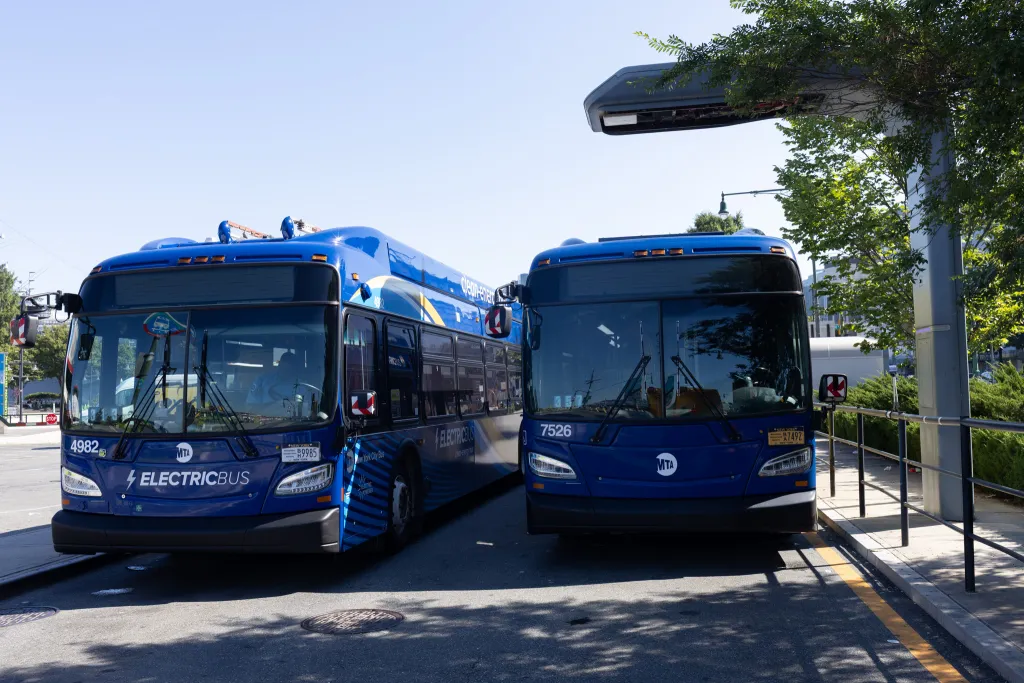
With its long-planned shift to a zero-emissions bus fleet slowed by underperforming electric technology, the MTA plans to order 650 new coaches that rely on compressed natural gas.
The MTA committed nearly a decade ago to having its entire fleet of close to 6,000 buses be emissions-free by 2040, but officials on Thursday said the transportation authority is instead seeking proposals from manufacturers to produce low-emissions alternatives to diesel.
Officials tied the release of a request for proposals to the “Next Stop: Fast Buses, Better Service” plan unveiled in July by Gov. Kathy Hochul and Mayor Zohran Mamdani, as the head of the MTA has repeatedly acknowledged that electric-bus technology is “still immature.”
“The governor and the mayor have been clear: better bus service can’t wait,” said Janno Lieber, the transportation authority’s chairperson and chief executive. “So, while the electric bus industry continues to mature, MTA is moving forward with CNGs to further improve service for the millions of New Yorkers who ride MTA buses every day.”

An August audit from state Comptroller Thomas DiNapoli warned that the 2040 target date for a zero-emissions fleet is “in jeopardy,” pointing out that the 75 electric buses from five MTA depots have been able to go into service less than 60% of the time that had been anticipated. But officials said the 2040 commitment remains in place.
The MTA began rolling out electric buses in 2018 and the zero-emissions models make up a sliver of a fleet with 5,983 buses in all.
Compressed natural gas buses are billed as quieter, cleaner and more reliable alternatives to diesel buses, which the MTA said are pricier to maintain and also subject to diesel price swings.
The 650 new compressed natural gas buses would be 40-foot-long, low-floor models that would replace 620 CNG buses that are already in service as part of the MTA’s largest single upgrade to its fleet since 2013.
“Modern, reliable buses can spend more time on the road and less time in the shop than the old vehicles they will replace, a win for riders who depend on frequent, reliable service to get around,” Hochul said in a statement.
As part of its 2025-2029 capital plan, the MTA also plans to purchase 500 zero-emission buses and to install charging infrastructure at bus depots. A 2020 report from the nonprofit Tri-State Transportation Campaign recommended that the MTA consider building new depots in less flood-prone parts of the city in order to better shield buses and charging equipment from rising water.
MORE: Follow The City Reporter’s award-winning transit coverage
The report pointed out that more than 3,400 buses are housed in neighborhoods with “very high,” “high” or “moderate” risk of flooding, based on 2050 flood projections.
The MTA has previously said that the ambitious effort to electrify its entire fleet could cost close to $12 billion, estimating in 2022 that it would require enough power to light up 200,000 homes.
Danny Pearlstein, policy director for Riders Alliance, a nonprofit advocacy organization, noted that electric bus issues have rippled across the transportation industry, while pointing out that compressed natural gas is far from an ideal alternative.
“Natural gas is a major and increasingly expensive contributor to global heating and not even close to being the affordable bridge we were falsely promised by the industry,” Pearlstein said. “MTA leaders should be doing everything possible to get back on track toward the fully electric bus fleet by 2024 envisioned in the capital program.”
Our nonprofit newsroom relies on donations from readers to sustain our local reporting and keep it free for all New Yorkers. Donate to THE CITY today.
The post MTA Flips the Switch from Electric Buses Back to Natural Gas appeared first on The City Reporter.