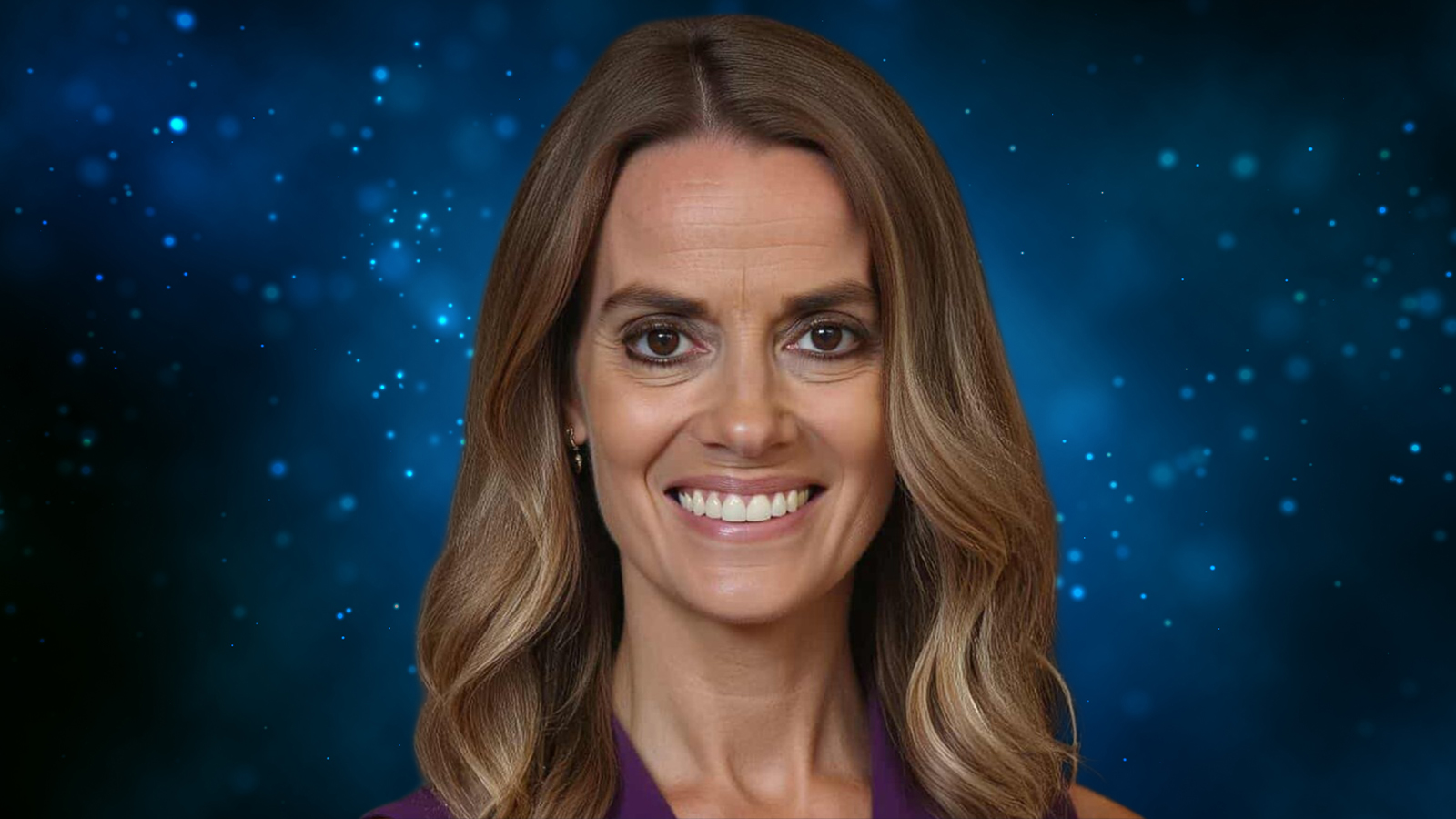
Michelle Petty is one of five candidates in the race for Duval County School Board District 6 vying to succeed incumbent Charlotte Joyce, who is stepping down after two terms.
Lindsey Denmark, Clarence James, Robert Stafford and Tammyette Thomas are also running. Assuming no candidate receives more than 50% of the vote in the Aug. 18 Primary, the top two will advance to a November runoff.
Florida Politics asked all candidates to answer a few questions. We are publishing their responses unedited so voters can hear directly from candidates. Here’s what Petty told us:
— Profession: After building a successful career in marketing and brand management, where I managed multi-million-dollar budgets, I decided to pursue a career in the legal field and for the past seven years, I have worked as a Paralegal.
— Education: I have a Associate in Science in Internet Services Technology/Webmaster/Web Development and a Bachelor of Science in Business Administration with a Marketing Focus.
— Years in the district: 22.
— Community involvement: Every year my family participates in a fundraiser for the American Heart Association as a tribute to my mother who died of a massive heart attack related to Heart Disease. My family also volunteers monthly serving at Feeding Northeast Florida as well as other community events. We are members of FBC Baldwin where I serve on the praise team as well as help with the church Wednesday night dinners. I am an avid crafter.
— Why are you running? What are your top priorities if elected? I am running for School Board because I believe every child deserves an excellent education in a safe, supportive environment and that every parent deserves a voice in that process. As a mother of two children in Duval County Public Schools, a longtime community advocate, and a Florida Registered Paralegal with a background in business and marketing, I bring both personal experience and professional expertise to the table. I want to help restore trust through transparency, responsible stewardship of taxpayer dollars, strong family engagement and a relentless focus on student success.
— What background and experience make you most qualified and best positioned to serve on the School Board? What uniquely qualifies me to serve on the Duval County School Board is the combination of my professional experience, educational background, and years of hands-on service in our public schools. As the parent of two kids in Duval County Public Schools, I understand firsthand the challenges and opportunities facing our students, teachers, and families. I have spent more than a decade actively serving our schools, including 11 years on a School Advisory Council (SAC), nine of those as chair. I have also served on the Academic and Community Excellence Committee (ACE), participated in the district’s Master Facility Plan Focus Groups, and helped lead the Save Baldwin Initiative. These experiences have given me a working knowledge of how our schools operate, how decisions are made and how those decisions impact our communities. Professionally, I bring a diverse skill set that is highly relevant to serving on a governing board. I earned a bachelor’s degree in Marketing and an associate degree in Web Design before beginning my career in marketing and brand management, where I managed multi-million-dollar budgets. That experience taught me strategic planning, financial stewardship, accountability, and how to make data-driven decisions. For the past seven years, I have worked as a Paralegal. My legal background has strengthened my ability to analyze complex issues, interpret policies and statutes, review contracts, and make thoughtful, well-reasoned decisions while ensuring compliance with the law. The School Board is ultimately a governing board. It must oversee a multi-billion-dollar budget, establish sound policies, ensure legal compliance, provide transparency, and keep students at the center of every decision. My experience in finance, business, law, and public school advocacy has prepared me to do exactly that.
— What do you see as the biggest challenges facing Duval County Public Schools (DCPS), and what can you realistically do about them if elected? I believe one of the biggest challenges facing Duval County Public Schools is rebuilding trust with the families we serve. When parents lose confidence in their school district, they begin looking for other options. We’ve seen many families choose charter schools, private schools, homeschooling, or other educational alternatives. As enrollment declines, the district receives less state funding because much of Florida’s education funding follows the student. That creates additional financial challenges, making it even more important that we spend taxpayer dollars wisely and prioritize the programs and resources that have the greatest impact on student success. Rebuilding trust isn’t about one issue, it’s about how we lead. It means being transparent with our community, communicating openly, listening to parents and teachers, making decisions based on what’s best for students, and being accountable for the results. As a School Board member, I know I won’t run the day-to-day operations of our schools, but I will have an important role in setting policy, approving budgets, hiring and evaluating the superintendent, and providing oversight. I will ask tough questions, expect measurable results and ensure decisions are made with integrity and transparency. While no single School Board member can reverse enrollment trends overnight, I believe we can begin restoring confidence in our public schools. When families trust that their voices are heard, that their children are safe, that academic excellence is the priority, and that taxpayer dollars are being managed responsibly, more families will choose to stay in … or even return to Duval County Public Schools.

— School choice is popular with many parents, but has also led to declining enrollment and funding for public schools. How would you address the challenges vouchers cause? School choice is a reality in Florida, and I support parents having the ability to choose the educational setting that best meets their child’s needs. Every child is different, and no single educational model is the right fit for every student. That said, school choice has created new challenges for traditional public schools because state funding largely follows the student. As enrollment declines, districts have fewer resources to maintain programs, staff, and facilities, even though many of their fixed costs remain the same. As a School Board member, my responsibility isn’t to debate the existence of school choice, it’s to ensure Duval County Public Schools remains a school district that families choose because they have confidence in the education their children will receive. That means we need to focus on what we can control: improving academic outcomes, maintaining safe and supportive schools, strengthening communication with families, using taxpayer dollars responsibly, and rebuilding trust in our district. We also have to make smart financial decisions. As enrollment changes, we must continually evaluate how we allocate resources, eliminate inefficiencies where possible, and ensure every dollar is being used to support student success. We cannot control state law, but we can control how well we serve our students. If we provide an outstanding educational experience and earn the trust of our community, more families will choose to stay in, or return to Duval County Public Schools.
— AI creates challenges for educators, but students also benefit from learning to use AI tools. How should AI be incorporated into classrooms and lesson plans, and what guardrails would you like to see implemented? Artificial intelligence isn’t something we can ignore … it’s already becoming part of everyday life. Our responsibility is to prepare students to use it responsibly and effectively, just as previous generations learned to use computers and the internet. I see AI as a tool, not a replacement for learning. When used appropriately, it can help students generate ideas, explore concepts, receive personalized support, and strengthen their understanding of a subject. It can also help teachers by streamlining routine tasks, giving them more time to focus on what matters most, which is teaching and connecting with students. That said, AI should never replace critical thinking, creativity, or the learning process itself. Students still need to develop strong reading, writing, math, and problem-solving skills. AI should enhance learning, not do the work for them. To make that happen, we need clear expectations and safeguards. Students should learn how to use AI ethically, recognize that it isn’t always accurate, identify potential bias, protect their personal information, and understand when AI is and isn’t appropriate to use. We should also have district guidelines for approved AI tools, teacher training, and transparency with parents about how these technologies are being used in the classroom. Ultimately, my goal is to ensure our students graduate prepared for the world they’re entering. AI will undoubtedly be part of their future, but the qualities that will set them apart, critical thinking, good judgment, creativity, integrity, and strong communication skills are things no technology can replace. AI should be a resource that supports great teaching and deeper learning, not a substitute for either.
— America’s second-largest public school system recently banned screens for young students. Should DCPS do the same? I don’t think this is a simple yes-or-no question. Technology absolutely has a place in education, but it should enhance learning, not replace it. For our youngest students especially, I believe the focus should be on hands-on learning, reading, writing, problem-solving, and building relationships with their teachers and classmates. Those experiences are critical to healthy development and can’t be replicated by a screen. Before making a decision, I’d want to review the research, hear from educators and parents, and evaluate how technology is actually being used in our classrooms. If a tool improves student learning, we should use it. If it’s simply adding screen time without improving outcomes, we should rethink it. Personally, I’m also a strong believer in the value of physical books. While technology can be a great educational resource, I don’t think it should replace the experience of holding a book, turning the pages, and developing a love of reading. I believe there should be a healthy balance between traditional learning methods and technology. My priority is making sure technology is used intentionally, in age-appropriate ways, and always in the best interest of students.
— How can the district improve student achievement and proficiency in basic math, reading and writing? Improving student achievement starts with focusing on the fundamentals. Every student should leave our schools with strong reading, writing, and math skills because those are the foundation for success in every other subject. I believe we need to use data to identify learning gaps early, provide timely interventions and ensure our teachers have the resources and support they need to help students succeed. We should also regularly evaluate our curriculum and instructional strategies to make sure they’re producing measurable results. Family engagement is another critical piece. Students are most successful when parents, teachers and schools work together. We need to improve communication with families and give parents the tools they need to support learning at home. As a School Board member, my role is to ensure we have strong policies, responsible budgeting and accountability measures that keep student achievement at the center of every decision. If something isn’t improving outcomes, we should be willing to evaluate it, make adjustments, and invest in strategies that are proven to work.
— What are some specific ways DCPS could improve students’ mental health? Student mental health has a direct impact on learning. If a child is struggling emotionally, it’s much harder for them to succeed academically. I believe our schools should focus on early identification, strong support systems, and partnerships with families. That means ensuring students have access to counselors when they need them, training staff to recognize when a student may be struggling, enforcing strong anti-bullying policies, and connecting families with community resources when additional care is needed. I also believe creating a safe, respectful school environment is one of the best things we can do for students’ mental well-being. When students feel safe, valued, and connected to caring adults, they’re better able to learn and thrive. Schools can’t solve every mental health challenge on their own, but they can play an important role in identifying concerns early, supporting students, and working alongside families to help every child succeed.
— Outside of vocational schools like Frank H. Peterson, should schools bring back classes like woodworking, auto repair and home ec, and teach financial literacy and other life skills? Absolutely. While college is a great path for many students, it’s not the right path for everyone. Our job is to prepare students for whatever future they choose. I would love to see more opportunities for students to take career and technical education courses like woodworking, auto repair, construction, culinary arts, and other skilled trades. These programs teach valuable, marketable skills and can lead directly to high-paying careers. I also believe every student should graduate with practical life skills. Financial literacy, budgeting, understanding credit, basic taxes, interviewing for a job, writing a résumé, and even basic home economics are skills that benefit every young adult, regardless of whether they attend college, enter the workforce, or join the military. Success shouldn’t be defined by one path. Our schools should equip students with the academic knowledge, technical skills, and life skills they need to thrive, whatever direction they choose after graduation.
— Shrinking enrollment has led to discussions about closing historic schools like Fishweir Elementary. Is it worth keeping older school buildings open, or is there a point at which repairs and maintenance costs no longer justify their continued use? I don’t think there’s a one-size-fits-all answer. Every school and every community deserves to be evaluated on its own merits. One thing that concerns me is that deferred maintenance often ends up costing taxpayers more in the long run. When routine maintenance is postponed or capital improvements aren’t addressed in a timely manner, small problems can become much larger and much more expensive. That’s why I believe the School Board has a responsibility to ensure maintenance dollars are spent as intended and that we take a proactive, not a reactive approach to caring for our facilities. Before considering the closure of any school, I would want to look at the full picture: the condition of the building, the cost of repairs versus replacement, enrollment trends, transportation impacts, and the needs of the surrounding community. If a school can continue serving students safely and effectively with responsible investments, I believe we should preserve it whenever possible. If the costs truly outweigh the benefits, then we owe it to taxpayers and families to have an honest, transparent conversation based on facts, not assumptions. At the end of the day, our responsibility is to be good stewards of both our school facilities and our taxpayer dollars while always keeping students’ best interests at the center of every decision.
— Anything else you want voters to know about you before they cast their vote? I’d like people to know that I’m not running for this position because of politics or personal ambition. I’m running because I genuinely care about our students, our teachers, our families, and the future of public education in Duval County. This has been a true grassroots campaign. I’ve knocked on thousands of doors, listened to families across our district, and had conversations with people from all walks of life. Those conversations have reinforced why I decided to run in the first place, to be a voice for our community and to help restore trust in our school district. I don’t claim to have all the answers, but I do promise this: I will come prepared, I will ask tough questions, I will listen before I vote, and I will always make decisions based on what’s best for students, not politics, special interests, or personal agendas. If I’m honored to earn your vote, I will serve with integrity, transparency and accountability, and I’ll never forget that every decision we make impacts the lives of children and the families who entrust us with their education.