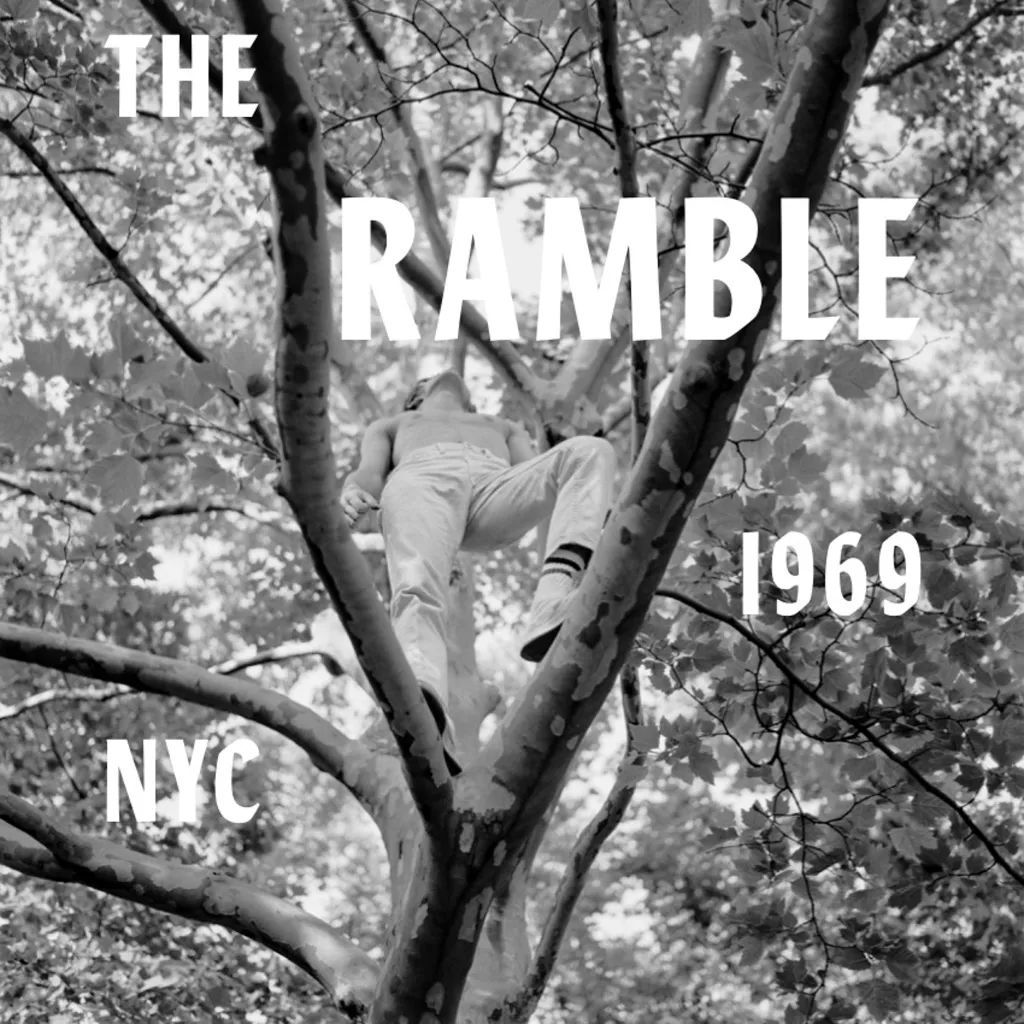
That sense of mystery is something that a lot of my better photographs have, and The Ramble at the time exuded a kind of mysterious… 19th century romanticism of the English garden that gave you that kind of experience. I used it as a kind of leitmotif when I was creating the photos, a kind of archetypical pattern of these dark shadows, these endless pathways, the late autumnal feeling of people doing these perambulations—almost a metaphor for the human condition, in a way.
Most of these men were looking for love. Sexual love, of course, but for companionship, love. And yet they’re constantly being thwarted by social conventions, their own psychological inhibitions. It became a very dream-like almost nightmare situation… And some of the better images in the series have a touch of that feeling, a kind of tormented anguish, a questioning of the human condition.
https://feeds.fireside.fm/faqnyc/rss?theramble
Arthur Tress, whose newly published photographs of gay men in Central Park’s Ramble in 1968 and 1969 are the earliest shots of outdoor cruising in a natural setting, joins Harry Siegel and Alex Krales to discuss his work in a New York City where homosexuality was still a taboo and a crime, why he’s publishing it now, and much more.
[Photographs from The Ramble, NYC 1969 are on display at the CLAMP gallery in Chelsea through February.]

Between 72nd Street and 59th Street was an abandoned railroad yard. The train still could go by on their way to Penn Station or something, but they had the remnants of this old railroad yard. There was a pier at 72nd Street where people would go out and sunbathe nude. And I would get models. I would just walk along and say, “Would you like to be in some of my photos?” And I found this couple, and I brought them over to this derelict freight car. It’s this couple kind of clinging to each other in this kind of falling-apart world, this very violent world, it’s become evocative now for people. My photos are always kind of spontaneous happenings within a certain kind of found environment. I don’t plan them out exactly.

One or two of the stronger portraits had been published before now. One was in Aperture Magazine. It’s an image of a shirtless young man with a kind of very intense expression, with some branches with thorns against his chest. But I would never say that they were taken in The Ramble. I would just say young men in Central Park, because they really were hidden photographs. I didn’t want to impinge on the privacy of the people in the photographs.

These two were my most elaborately staged and directed photos. These two guys, I had them moving around that famous stone arch.

When people cruised in the bushes or wherever, your hand on the crotch was certainly a sexual invitation but also this continual wandering down the labyrinthine paths is kind of very dreamlike and in itself an experience. So those were two photographs where I think my more mature style was beginning to show itself

I began really focusing on the gay world, the gay cruising world in Manhattan. Those were the Christopher Street piers. It was just two guys standing there, which was kind of dangerous. You know, they were falling apart. And we had piers at 72nd and Riverside. There was a whole stretch, some of which is still there, of [what was then] abandoned waterfront, and I would occasionally go down. This was a lost image. I just was going through the contact sheets and said, “Well, that’s really a good picture.” It’s actually gotten a little bit more exposure now, and it’s just been bought by a museum. My prints aren’t very expensive, as I feel that photography is kind of democratic and you can make lots of prints. A museum I had never really heard of, called the Reina Sofia in Madrid, just bought a print, so that photograph now has a kind of a life of its own. It’s kind of a classic, just a very 1980s moment.

That was 1967, 68, with the flower children from the Summer of Love in San Francisco, but also certainly the East Village. I personally think that they were more out, fashion-wise, and had a certain sexual fluidity that was kind of a precursor of gay lib. It was kind of hippie lib. You know, they were having group sex and living in communes. All kinds of street drag queens, and they were breaking down all kinds of barriers and were very much out in the world.

I think that was a gesture that he did on his own. What’s funny is that in the background is the Dakota, where they filmed Rosemary’s Baby, and he looks like Mia Farrow, which I thought was a kind of strange coincidence. In other words, we’re trying to define what is surrealism. You know, what is the dream like? And we’re always kind of on the edge of that in our daily life. The word surreal has become quite over-used, but it’s when something is transformative, when an ordinary scene just edges into something a little bit different. It can be elaborately set up, or it can just be kind of nudged into happening, to have that kind of disturbing scene. You know: What is that?
Our nonprofit newsroom relies on donations from readers to sustain our local reporting and keep it free for all New Yorkers. Donate to THE CITY today.
The post LISTEN ‘The Last Confederate Widow’ of 1960s Cruising appeared first on THE CITY – NYC News.
