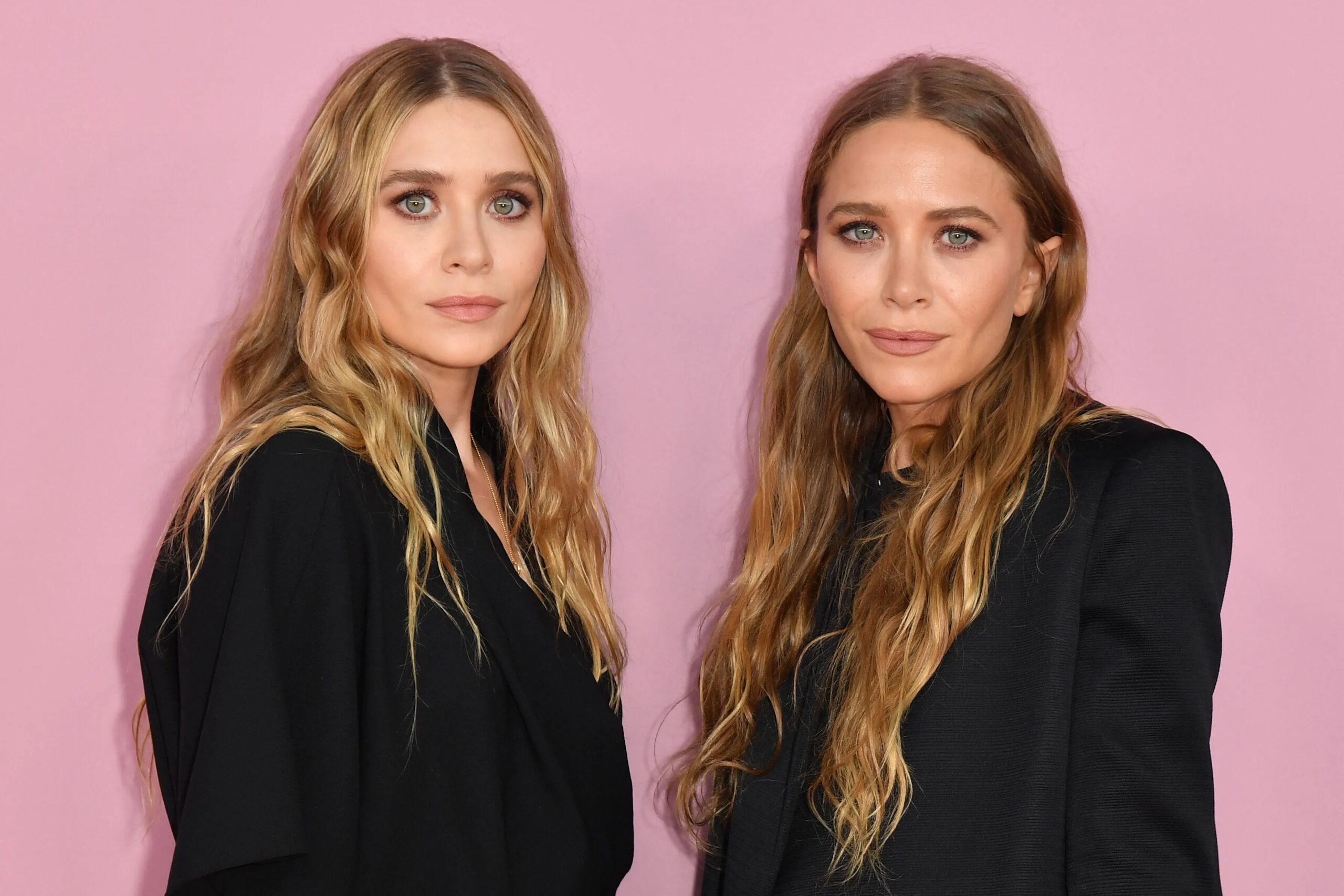
As Mary-Kate and Ashley Olsen’s The Row takes on its first Paris Fashion Week as a member of the Fédération de la Haute Couture et de la Mode (FHCM), the label arrives with some of the most powerful backers in luxury. In 2024, Chanel owners Alain and Gérard Wertheimer and L’Oréal heiress Françoise Bettencourt Meyers bought minority stakes in the brand at a valuation of roughly $1 billion, with the Olsens keeping majority control. What the sisters have built with that control is a tightly held universe, and sound is one of its most deliberate layers. The Row’s monthly Spotify playlists have become part of the brand’s mystique; September’s edition pulled 1980s tracks from minimalist R&B legend Sade and dance-pop figure George Michael. With just over 100,000 followers, the playlists are a modest presence by social media standards, which suits a brand that trades on keeping its audience small.
The Row’s attention to sound comes as the music industry leans harder on fashion money, and as many houses put less creative thought into their own music. Rather than commissioning bespoke sound, luxury brands increasingly pipe generic playlists into their stores, according to Frédéric Sanchez, the sound illustrator who designs audio for Hermès, Givenchy and Toteme. Meanwhile, artists now sign with the record labels most likely to land them a luxury-brand deal, says Antoine Ressaussière, creative director of Maison Kitsuné and former artistic director at Universal Music Group.
Sanchez, who began working with Maison Margiela upon its founding in 1988, likens the power of luxury sound to that of perfume.
“The sound shows what you don’t see,” Sanchez told Observer. “You express what is behind the curtains.” Music, he added, has the power to influence a brand’s fans and consumers.
Fashion has always had a soundtrack—early 20th-century mannequin parades were accompanied by string ensembles or pianists—but over the past several decades, houses like Prada, Dior Couture and Alexander McQueen have turned music into a world-building tool for brand identity. Sanchez is one of a small circle of specialists brands hire to build on their seasonal persona and innate identity through bespoke sound. Others include Michel Gaubert, who has worked with Fendi and Chanel, and the sound design agency O + CO, whose projects include Hermès and Chloé.
Despite ongoing demand for his work, Sanchez says brands consider music less holistically than they once did, and he traces the shift to fashion’s retreat from exclusivity.
“Now, fashion is so open to the people,” said Sanchez. “It’s very difficult to please everybody, and there’s not this idea anymore that if you don’t understand us, don’t come in the store.” The 1980s and ’90s invited experimentation, he added; modern strategies are safer, and perhaps less creative.
Part of that retreat shows up in the stores themselves. Luxury brands increasingly rely on canned music servers, a practice Sanchez calls standard and believes dilutes the experience.
Ferrari’s style division, led by creative director Rocco Iannone, is one exception. “They created this Ferrari style, a new brand that is suddenly a fashion house inside Ferrari,” said Sanchez, referring to the in-house luxury collections Ferrari first debuted in June 2021. Iannone commissioned Sanchez to create custom sound design for the label’s storefronts, treating audio as an extension of the brand’s identity.
Some brands have become patrons of a sort, staging big one-night events that put significant money into the music scene. Ressaussière respects houses like Saint Laurent, where creative director Anthony Vaccarello layers in cinema through Saint Laurent Productions. But, he said, “there are other brands which [use music as] pure opportunity.”
His own house is built the other way around. Maison Kitsuné launched in 2002 as both an indie music label and a fashion house. Gildas Loaëc, who served as art director for French house music duo Daft Punk in the 1990s, founded it with Masaya Kuroki as a Parisian answer to Japanese brands like BAPE that already combined the two worlds.
“The alliance between music and fashion is magical for me,” Ressaussière told Observer. “It’s the perfect equation.” Other brands, he said, fall short: “I can feel that sometimes fashion brands use the music, [but] they don’t respect the creators, the music, the genre.” For Kitsuné, he added, “it’s not a marketing strategy.”
Kitsuné Musique has worked with Two Door Cinema Club, Hot Chip, La Roux, Bloc Party, Parcels and more, and is perhaps best known for its compilations, cross-genre albums that capture a vibe rather than a single scene. “We talk about playlists now, but back in the day, it was really interesting to put something from a punk rock band with something techno and mix this into the compilation,” said Ressaussière. Inclusion helped launch artists from M.I.A. to Digitalism. As the house approaches its 25th anniversary in 2027, its sound has moved toward indie sleaze and live, gritty acoustics layered over its electronic roots.
For the Olsens, music is one more layer of a carefully constructed world, alongside the Jean Prouvé sliding fitting-room doors in The Row’s Paris boutique and the James Turrell light installation in its London store. The brand’s Instagram feed is largely art curation, with its own collections secondary. For a label whose shows ban cameras, a playlist is one of the few windows into the famously private sisters’ taste.
As fashion opens itself to more people and more houses hand their soundtracks to automated servers, brands with a clear point of view and a deeply creative universe remain culturally magnetic in a way stock playlists can’t replicate. Ressaussière’s question about brands’ splashy one-night music events applies to the rest of the industry, too: “At the end of the day, is it a real commitment to music?”