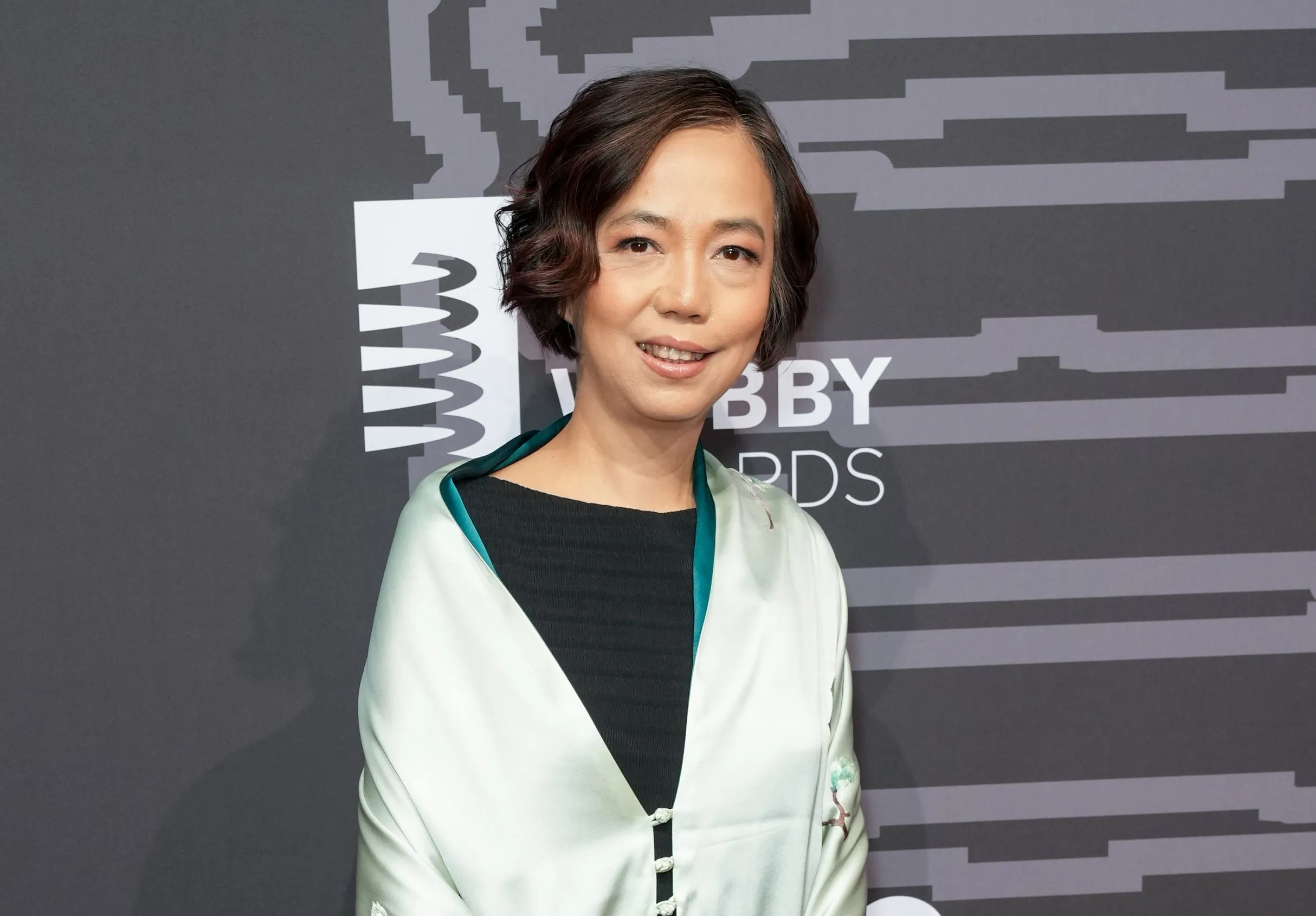
Each three months, public firms brace for analyst questions throughout quarterly earnings calls. However what if companies might predict these queries prematurely and rehearse their responses? That’s one of many capabilities touted by Simile, a brand new A.I. startup spun out of Stanford and backed by acclaimed researcher Fei-Fei Li and OpenAI co-founder Andrej Karpathy.
Simile emerged from stealth yesterday (Feb. 12) with $100 million in funding from a spherical led by Index Ventures. Alongside Li and Karpathy, the startup—which hasn’t disclosed its valuation—additionally counts traders together with Quora co-founder Adam D’Angelo and Scott Belsky, a companion at A24 Movies.
Li and Karpathy each have shut ties to Simile’s founding staff, which incorporates Stanford researchers Joon Park, Percy Liang and Michael Bernstein. Li is the co-director of Stanford’s Human-Centered A.I. Institute and suggested Karpathy throughout his Ph.D. examine on the college. She is broadly identified for foundational work comparable to ImageNet, a large-scale picture database that helped drive main breakthroughs in laptop imaginative and prescient. Karpathy and Bernstein additionally contributed to that venture.
Simile’s mission of utilizing A.I. to replicate and mannequin societal conduct faucets into an underexplored analysis space, in response to Karpathy, who beforehand labored at OpenAI and Tesla earlier than launching his personal education-focused A.I. startup. Whereas giant language fashions usually current a single, cohesive persona, Karpathy argues they’re truly educated on knowledge drawn from huge numbers of individuals. “Why not lean into that statistical energy: Why simulate one ‘particular person’ when you could possibly attempt to simulate a inhabitants?” he wrote in a submit on X.
That concept underpins Simile’s broader purpose. The Palo Alto-based startup goals to simulate the real-world results of main choices, from public coverage to product launches, throughout digital populations that mirror human conduct. The staff has already examined this idea on a smaller scale by means of tasks like Smallville, a 2023 Stanford experiment wherein 25 autonomous A.I. brokers interacted in a digital setting.
Now, Simile is scaling the method for enterprise use. After spending the previous seven months growing its mannequin, the corporate is already working with shoppers on functions starting from product growth to litigation forecasting. CVS Well being Company, for instance, makes use of Simile to create simulated focus teams, whereas Gallup makes use of the platform to construct digital polling panels. For incomes calls, Simile can predict about 80 p.c of the questions that analysts in the end ask, mentioned Park, the startup’s CEO, throughout a current look on TBPN.
At current, Simile’s fashions are primarily based on knowledge from tons of of hundreds of people that have signed up for its research. Over time, the corporate hopes to increase that to simulations representing the world’s total inhabitants of roughly 8 billion individuals.
Simile joins a rising wave of A.I. firms centered on utilizing simulation to mannequin real-world eventualities. A lot of the prevailing analysis on this house has centered on bodily techniques, comparable to robotics and autonomous automobiles, by means of “world mannequin” platforms developed by companies like Google and Nvidia.
One of the outstanding figures in world fashions is Li herself. In 2024, she took a go away of absence from Stanford to launch World Labs, a startup that builds 3D digital environments from picture and textual content prompts. The corporate has raised $230 million to this point and is valued at greater than $1 billion.

