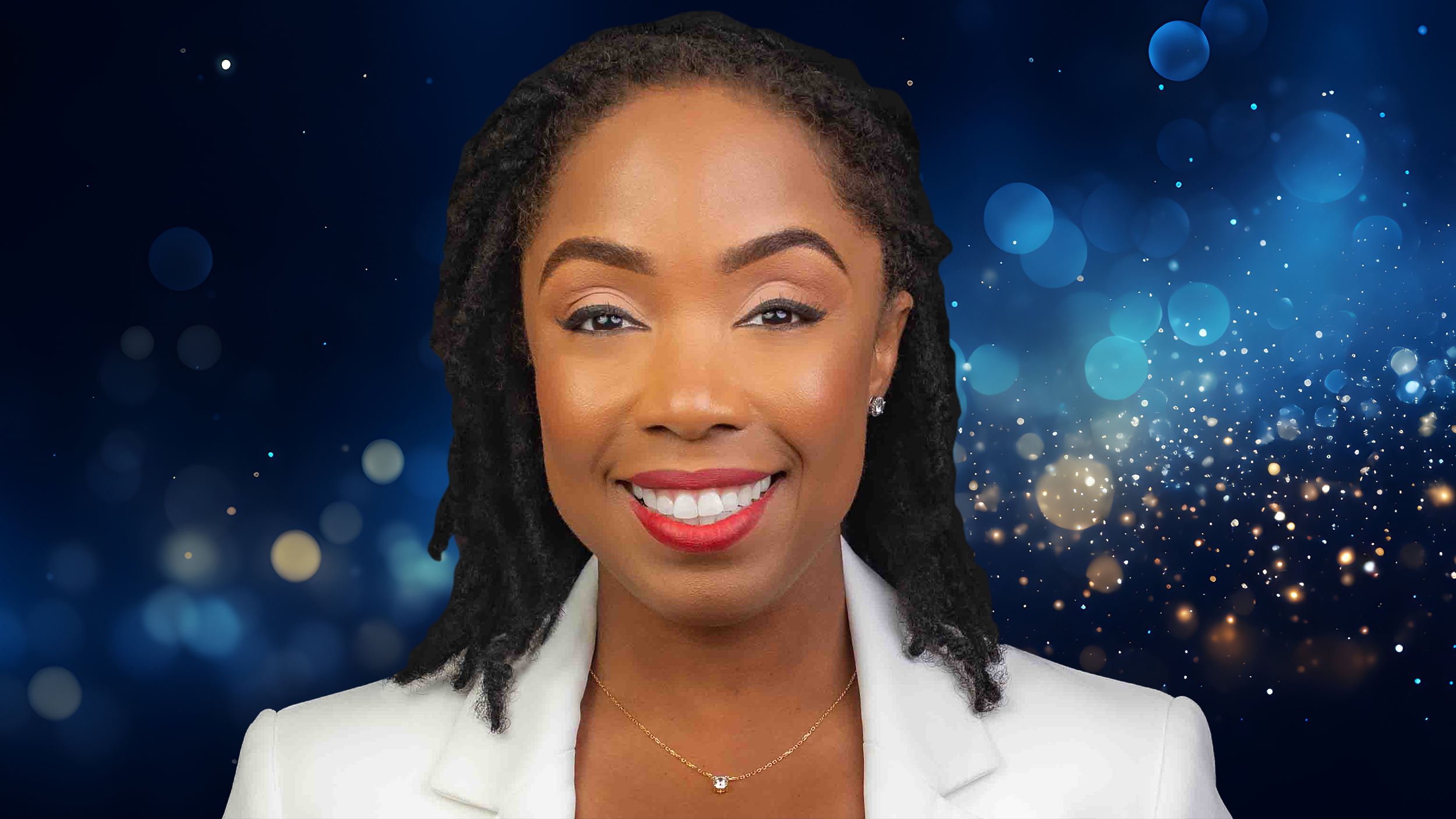
In Senate District 34, Christine Sanon-Jules Olivo is competing in a Democratic Primary against Ashley Gantt and Shannan Ighodaro in the race to succeed Sen. Shevrin Jones, who is now running for Florida’s 24th Congressional District.
The heavily Democratic district covers a large swath of Miami-Dade, including Bay Harbor Islands, Miami Beach, North Miami, North Miami Beach, Opa-locka and Miami Gardens, the most populous Black city in Florida.
Republican Elizabeth Jeanty will be on the ballot in November.
Florida Politics asked all Democratic Primary candidates to answer a few questions about the race. We are publishing their responses unedited so voters can hear directly from candidates. Here’s what Sanon-Jules Olivo told us:
— Profession: I am a former Youth Director, Middle School Teacher and AmeriCorps alum who went on to become an entrepreneur.
— Education: I hold a Bachelor’s degree in Public Administration and a Master’s in business from Barry University, and I’m currently completing a second Master’s degree in Public Policy at the University of Miami.
— Years in the district: I was born in this district, left in 2004 to study the arts in Los Angeles, and came back home in 2011.
— Community involvement: I have organized TPS (Temporary Protected Status) town halls to support immigrant families navigating uncertainty around their status. I also served as a mentor with the National CARES Mentoring Movement at schools including B. Wright Leadership Academy, South Florida Fashion Academy, and Motivational Edge. My faith is an important part of my life. I am currently doing 34 days of prayer for District 34. As a former teacher and AmeriCorps member, community service has always been central to how I show up. Outside of organizing, I run a small business and stay active in Miami-Dade’s civic and nonprofit circles. Public service isn’t new to me; this campaign is the next chapter of work I’ve done for years.
— Why are you running? What are your top priorities if elected? I’m running because too many families in this district are working hard and still falling behind, not because of bad choices, but because our state keeps choosing to give money and opportunity to the wrong people. My campaign is built around what I call an Economic Dignity Agenda: six priorities including affordable housing (the Florida Keys to Home Act), expanding vouchers to cover the cost of childcare (Florida KidCare Access Act), Telehealthcare for ALL, providing individuals with the necessary financial support they need (the Florida Stability Act, or “Never Miss a Bill”), housing security for seniors and veterans, and growing Florida’s film and entertainment industry to create good local jobs. My top priority is simple: make sure the people who built this district can still afford to live in it.
— What are the biggest challenges facing this district, and what can you realistically do about them if elected? The affordability crisis touches everything here; housing, insurance, healthcare, groceries. Bringing back the middle class is central to how I think about this district. Too many of our working families have been priced out of the neighborhoods they grew up in. Part of that is bringing back the jobs that left Florida for states like Georgia by expanding our film and television entertainment tax credit to bring those high-paying production jobs back home. Realistically, as a freshman in the minority party, I won’t pass sweeping legislation alone. But I can file bills that build bipartisan coalitions around these kitchen-table issues, use appropriations requests to bring real dollars home to the district, and use the office as a platform to hold agencies accountable and connect constituents to resources that already exist but go underused.

— What is one bill you would like to file next Session? The Florida Stability Act, what I call “Never Miss a Bill.” It gives individuals access to three months of emergency savings through a revolving account, seeded through TANF (Temporary Assistance for Needy Families) so a job loss or emergency expense doesn’t spiral into missed rent or a lapsed utility bill.
— How do you plan to get things passed given you will be in the minority? Will you aggressively challenge actions by the GOP majority you disagree with, or is it best to be more conciliatory to secure appropriations and legislative wins? Both, depending on what’s at stake. I believe in delivering, not just making noise. That means being strategic: building relationships across the aisle to get appropriations and workable bills across the finish line for this district, the way effective legislators do. But there’s a difference between being pragmatic and being silent. When a policy would hurt working families, seniors, or kids in this district, I’ll say so clearly and use every tool available, floor statements, public pressure, coalition-building, to fight it. I’d rather have a smaller number of real, verified wins than a lot of headlines with nothing to show for it.
— The cost of groceries, gas, housing and utilities is top of mind for voters right now. What specific policies do you propose to make life more affordable for constituents? Bringing back the middle class starts with bringing back the jobs. As I briefly stated, I want to expand Florida’s film and television entertainment tax credit to win back the high-paying production jobs that left for states like Georgia. Housing is also central: the Florida Keys to Home Act will aim to expand affordable housing stock, plus dedicated housing security protections for seniors and veterans. On childcare costs, the KidCare Access Act, covering childcare costs starting from the birth of a child, helps families plan ahead instead of scrambling when those costs hit. On tax policy, I support a fairer approach to who pays what in this state, modeled on frameworks that ask the wealthiest Floridians and corporations to pay their fair share instead of squeezing working families through fees, tolls, and regressive taxes.
— How do you balance Florida’s rapid economic growth and development with protecting affordability and quality of life for existing residents? Growth should benefit the people who already live here, not price them out. That means pairing any new development or major project with real affordability requirements and accountability, not growth for growth’s sake. It also means investing in infrastructure that mitigates risk, particularly around flooding and resilience, which is directly tied to why insurance costs keep climbing. If we’re serious about growth, we have to be just as serious about the infrastructure investments that make this state insurable and livable for the people already here.
— Many counties have recently enacted data center bans and moratoriums, but our use of AI tools continues to grow. Is there a place for data centers anywhere in Florida, or should other states host the infrastructure that powers AI? I don’t want to see any more data centers in our district. The ones already here need to be regulated so they stop draining the resources our residents depend on: energy, water, and infrastructure that should be prioritized for the people who live here, not server farms. I’ve studied how government oversees AI and algorithmic systems as part of my graduate work, and my view is that the growth in AI infrastructure can’t come at the expense of the communities hosting it. If other states or regions want to take on that footprint, that’s their call, but I’m not going to trade my constituents’ resources for it.
— Do you support any kind of property tax relief? If Amendment 3 passes in November, what (if anything) should the Legislature do to help municipalities reeling from the loss of ad valorem revenue? I oppose Amendment 3. Eliminating property taxes isn’t the answer. It would gut the revenue municipalities rely on for schools, first responders, and basic services, without actually solving the affordability problem for most residents. The real pressure points for families right now are the high cost of property insurance and rising utility costs. That’s where I think the Legislature’s focus and energy should go, rather than a blanket tax elimination that creates a bigger crisis than the one it claims to solve.
— Anything else you want voters to know about you? What you may not know about me is that I’m Haitian American. My dad’s side of the family is from Port-au-Prince, and my mom’s side is from Cap-Haïtien and Lembe. My children are half Puerto Rican and half Haitian. I come from a multicultural upbringing, and I look forward to using those experiences to better serve my community.