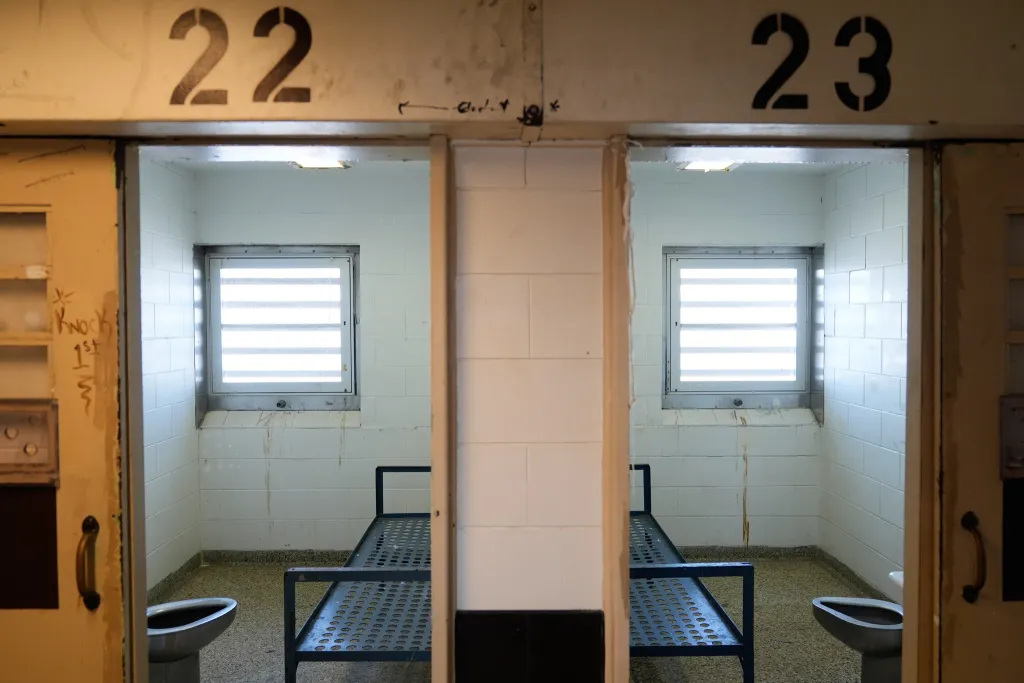
The body of a Rikers Island detainee who overdosed wasn’t found for about 14 hours, according to a report by a court-appointed monitor overseeing the Department of Correction, as wider long-delayed jail reforms move at a “glacial pace.”
“The glacial pace of reform has been frustrating to all stakeholders and is far less than the urgency of the situation demands,” said monitor Steve Martin, noting violence is still far above levels the jail system reported in 2016, when he was first appointed.
“The high risk of harm is ongoing and pervasive,” the 432-page report said.
The report is the most recent oversight document detailing negligence and excessive use of force by corrections officers amid efforts to close Rikers and build new jails closer to courts.

The status update comes a week after Mayor Zohran Mamdani detailed the city’s latest plan to shut down Rikers, which will begin gradually as the first new jail in Brooklyn is expected to be complete in about three years and extend until 2032. The report did note some positive developments. Martin, who is based in Texas, said the Correction Department and the federally appointed remediation manager, Nicholas Deml, and his team “have made some important forward progress.”
Martin credited them with establishing a reliable baseline of staffing practices for the first time in more than a decade, reorganizing the Correction Department’s deeply flawed investigations division, and winning court approval for a comprehensive action plan to guide reforms.
Jail staff appear to have curtailed some of the most extreme uses of force, the report said. But Martin described that as a baseline expectation, not proof of compliance, and wrote that the city’s jails reflect “a system that is generating avoidable force events and then responding to them.”
The report, which covers January to June 2026 (and all the deaths since), is Martin’s 23rd status update. It echoes many prior failed efforts to improve conditions for detainees and staff, including a deeply flawed disciplinary system, officers too quick to use force, and hundreds of broken cell doors.
Conflict Over Solitary Confinement
The monitor also raised new concerns about a City Council law sharply restricting the use of solitary confinement, arguing that the legislation — currently on pause due to mayoral override — could make an already volatile jail system more dangerous if implemented before the Department of Correction addresses its underlying problems.
Martin and Deml said the city’s jails lack the operational foundation needed to safely implement key provisions of what is known as Local Law 42.
They warned that eliminating managerial discretion in certain situations could increase the risk of harm. Martin also flagged potential conflicts between the law’s requirements and existing court orders governing jail operations.
Still, the city and the monitoring team are continuing to develop a pilot program for restrictive housing where detainees who act out would be placed as an alternative to solitary. That includes finding a location, the right staff, security protocols and rehabilitative programming.
Martin and Deml’s concerns come after city lawmakers spent years crafting the new rules following the death of Layleen Polanco. The 27-year-old transgender woman was in the ninth day of a 20-day solitary confinement sentence when she was found lifeless inside her Rikers cell. She was being held in lieu of a $500 bond for misdemeanor sex work and drug possession charges.

Overall, Martin’s review used almost identical language from his prior report, in January, to describe the slow pace of meaningful changes.
“The reform effort continues to progress at a glacial pace,” he said, citing entrenched resistance and “pervasive poor practices.”
Martin and his team, led by Anna Friedberg, a lawyer with no previous jail experience, have billed the city $22 million since 2024, the latest year of available data. Martin rarely visits Rikers himself and primarily relies on Friedberg and some city jail staffers assigned to assist.
For all the damning findings in his reports, Martin has seldom pressed U.S. District Judge Laura Swain, who oversees the case, for immediate action. Instead, he has repeatedly chided jail officials for ignoring his advice and dragging their feet.
The review was made public late Tuesday night before the Thanksgiving holiday weekend. Several of Martin’s prior reports have also been published right before holiday stretches when the public is less focused on news.
Violence and Mayhem
In the latest report, Martin cites one eight-day stretch, Oct. 1 to 8, as an illustration of the ongoing danger. Over those days, the Correction Department reported 148 uses of force by correction officers, six stabbings and slashings (including two attempts), seven fires, 42 incidents of detainees hurting themselves, and 35 assaults on staff. There were also 16 serious-injury reports from fights or reported assaults, seven incidents in which Narcan was administered, 38 discoveries of contraband, and 28 emergency lock-ins.
The report also describes two incidents in a two-week span in late August and early September when staff at the Otis Bantum Correctional Center used pepper spray on men who had tied sheets around their necks and attached them to holding pens.

In both cases, staff hit the men, who were trying to take their own lives, with pepper spray.
Martin called the incidents “especially troubling” because the department’s own directive expressly prohibits using chemical agents on someone trying to hang themselves. The department revised that directive in 2025, but Martin wrote that his team “continues to identify incidents” in which staff use pepper spray in those dire mental health crises.
In one July 5 incident at the West Facility on Rikers, the report says an officer grabbed a detainee by the neck, pulled his hair, kneed him in the head and struck him with a chemical-agent canister. The officer then sprayed him while he was restrained and also used racially charged language during the violent encounter, according to the report.
A captain had to order the officer to step away. He was suspended for 30 days and resigned in September while facing formal charges.
The 14-Hour Delay
As for deaths in custody, nine people have died behind bars this year so far.
That includes Barry Cozart, 39, who was found unresponsive inside the George R. Vierno Center on March 25.
Cozart had a history of substance abuse and was seen on surveillance video looking intoxicated the night before his death, according to the report.
Staff repeatedly failed to conduct proper tours, left their posts unsupervised for extended periods, and a logbook entry falsely recorded that a tour-tracking device was working. Cozart’s body wasn’t found until roughly 14 hours after he was last seen moving, the report said.
The Medical Examiner said the cause of death was acute intoxication from the combined effects of methadone and gabapentin.
The area captain and floor officer were each suspended without pay for one month.
Another detainee, John Price, 49, suffered from clear signs of medical distress as he waited for roughly 3 ½ hours in a clinic holding pen without being seen because jail officers didn’t tell medical staff he was having a medical emergency inside the Eric M. Taylor Center on March 28.

No jail or medical staff have been disciplined but the investigation is ongoing, Martin said.
“The deaths of people in DOC custody are tragic and continue to expose the serious consequences that occur when basic security, supervision, and correctional health practices break down,” Martin wrote.
Martin urged better communication between DOC and Correctional Health Services, which oversees medical care, “to improve prompt identification of people in distress, and improve emergency response times.”
The Correction Department referred The City Repoter to City Hall for questions. Mayoral spokesperson Sam Raskin said the Mamdani administration is “committed to working alongside the Remediation Manager and Federal Monitor to deliver the urgent improvements our jail system needs” as the city moves to close Rikers and transition to borough-based facilities.
The Legal Aid Society, which brought the class action case that has led to the monitor and remediation manager, said the report showed how little progress had been made despite a decade of court oversight.
“The conditions at Rikers Island remain dangerous and unacceptable,” said Mary Lynne Werlwas, director of the group’s Prisoners’ Rights Project, and Debbie Greenberger, a partner at the law firm Emery Celli, who issued a joint statement.
Our nonprofit newsroom relies on donations from readers to sustain our local reporting and keep it free for all New Yorkers. Donate to THE CITY today.
The post Rikers Monitor Details 14-Hour Delay in Finding Overdose Victim, Slams Slow Pace of Reforms appeared first on The City Reporter.