The Plaza does Christmas with a gratifying disregard for understatement. By early November, the lobby was already full of trees, their tinsel catching the lights. In a city as prodigal with invitations as New York, the Hope for Depression Research Foundation’s annual HOPE Luncheon Seminar is an occasion to look forward to, and this year the sight of that room was worth lingering over. The hotel is scheduled to close in January 2027 for at least four years while crews restore its landmark façade.
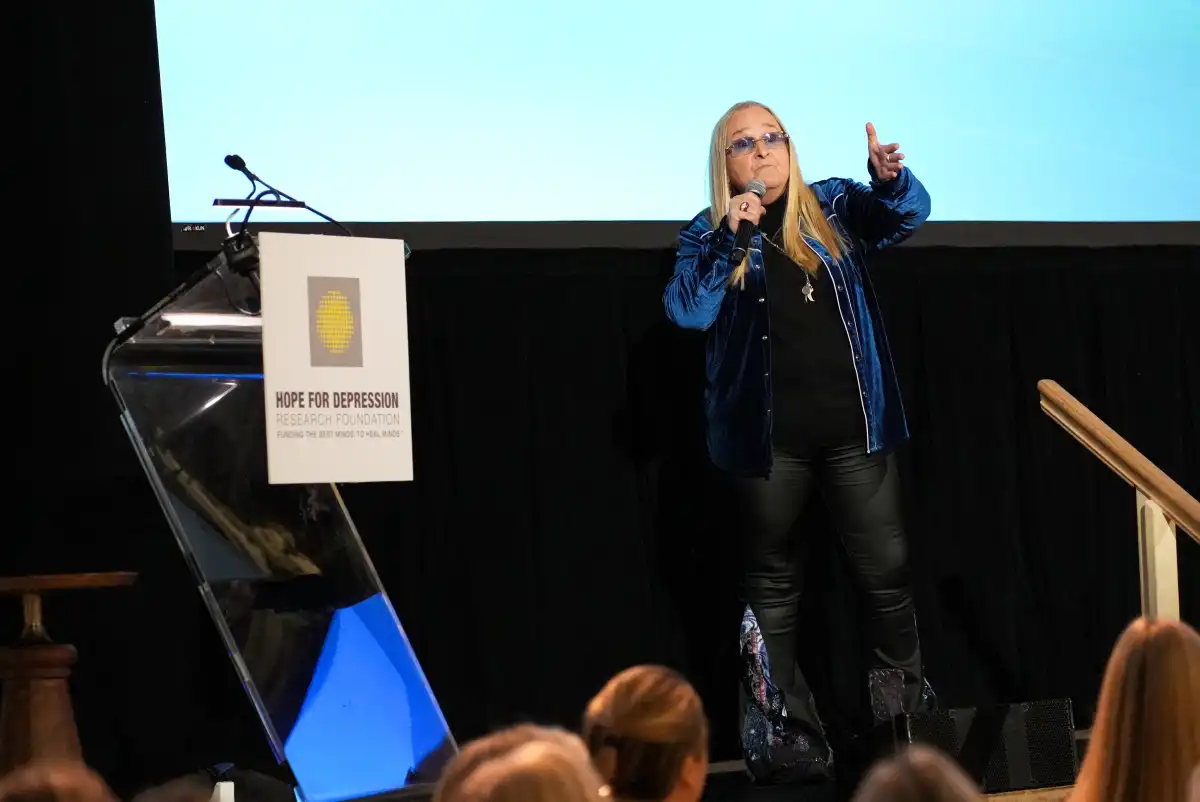
Melissa Etheridge, who received the HOPE Award for Mental Health Advocacy at the foundation’s twentieth luncheon, has the sort of voice that makes reserve seem like a wasted opportunity. The work that brought her there began after her 21-year-old son, Beckett, died in 2020 from causes related to opioid addiction. Fans began donating, she told Forbes shortly before the luncheon, “because they didn’t know what else to do when I lost my son.” The Etheridge Foundation grew out of those early gifts and now supports research into potential treatments for opioid use disorder, including plant medicines and psychedelics.

Audrey Gruss, who chairs HDRF, came to the work as a daughter and as her mother’s advocate. She watched Hope endure years of misdiagnosis, successive medications and their side effects, and has written of the “life-sapping loss of energy” her family witnessed. She founded the organization in her mother’s memory in 2006, and it says it has since invested more than $90 million in research. A figure like that can sound abstract until you picture the woman whose name the foundation carries, returning, year after year, to ask what else might be tried.
There is considerable freedom in being able to tell a friend what it takes to get through the day without first composing a version of the story that will be easier to hear. A study in JAMA Network Open found that Americans surveyed in 2018 were more willing than those surveyed in 2006 to work or socialize with someone described as having major depression. A patient who can finally be frank about the extent of their suffering deserves a science that is equally exacting about what might help.

Two people can receive the same diagnosis and describe days that have astonishingly little in common. Depression can begin after childbirth or return with the shortening days of winter. It can wake one person hours before dawn and leave another exhausted after a long sleep. Still others may go to a doctor because they are in physical pain. Clinicians call a loss of pleasure anhedonia. Someone can remember, down to the room they were in, what a favorite song once did to them and find that the recollection is as close as they can come to the pleasure itself.
Oxford psychiatrist Husseini Manji, who gave the keynote on brain circuitry and antidepressant treatment, has drawn a parallel with oncology, where understanding the biology of different cancers has changed how doctors choose treatments. Manji helped develop esketamine, a nasal spray approved in the United States for adults whose depression has persisted despite adequate trials of at least two antidepressants. At the luncheon, HDRF announced its Precision Psychiatry Initiative to investigate how differences in genetics, responses to stress and the workings of brain circuits might guide the choice of treatment.

The foundation’s Depression Task Force says it has examined roughly 1,500 genes that may play a role and identified 20 biological targets for further study. Some new approaches could reach initial trials in people as early as 2027. At Columbia University, an HDRF-supported pilot study is designed to examine whether psilocybin changes the density of synapses, the junctions through which brain cells communicate, in people with treatment-resistant depression. They hope to identify a measurable feature of the brain that might predict who responds. Such a finding, if borne out in further studies, could give a patient and a physician a firmer basis for choosing what to try.
An antidepressant can take weeks to show a benefit. In the meantime, a patient may have a child to get to school and a shift to finish before they can see the doctor again and describe, honestly, how little has changed. It takes a formidable amount of faith to keep making appointments for a future that has grown so difficult to imagine. When a treatment does work, the same person might make a plan for Friday, for the simple and rather marvelous reason that they find themselves looking forward to it.