A cancer diagnosis can make the unfinished things in a life feel suddenly unbearable. There are the ordinary regrets, of course—the visit postponed, the affection left unspoken—though for an artist, there may also be the particular anguish of a mind still crowded with images while the body grows too frail to give them form. Perhaps, after years of uncertainty, the world is finally asking for more, just as treatment begins consuming the strength to make it and medical bills swallow what little security success has brought. It is within that painful distance between having something left to say and being able to say it that the Rema Hort Mann Fund has chosen to intervene, asking those who cherish the work to help sustain the person behind it.
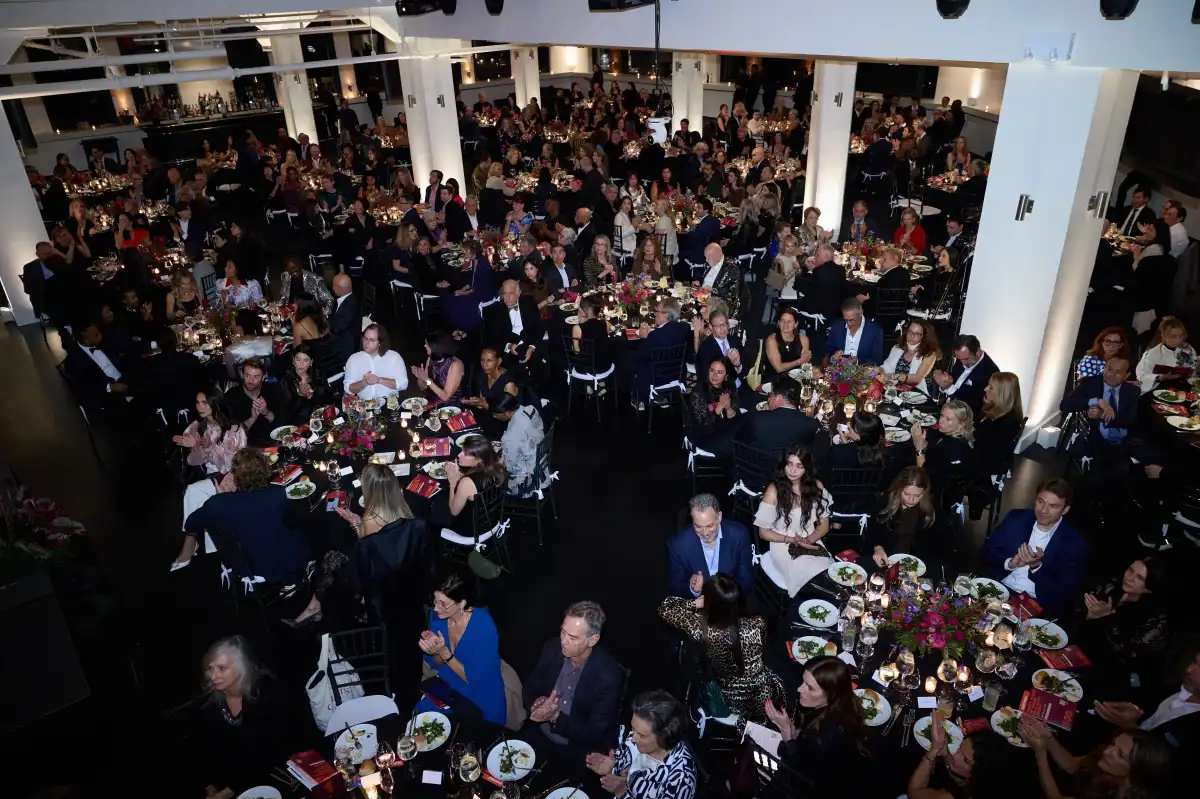
At the end of October, more than 300 supporters gathered at Tribeca Rooftop for its thirtieth-anniversary gala and the launch of its Artists Living with Cancer Grant. The auction was stunning, the room full of cultural veterans, yet the evening’s deepest appeal reached beyond the pleasure of acquisition. Giving, here, became a way to protect someone else’s chance to continue.
The beginnings were profoundly personal. In 1995, after Susan and Michael Hort lost their daughter, Rema Hort Mann, to stomach cancer at thirty, they gathered around a kitchen table with her husband, Billy Mann, and close family and friends. Rema had cultivated relationships with emerging artists and was a founding member of the New Museum’s Young Collectors Group. Supporting talent before recognition arrived was part of how she moved through the world. The Fund would carry that attention forward, giving others the encouragement she could no longer offer herself.
Its commitment to cancer care grew from an equally intimate encounter. Susan recalled a young woman with brain cancer whom they had met through Rema’s visits to CancerCare. Her parents lived far away, her boyfriend had left, and she was considering abandoning treatment rather than enduring it alone. The need was painfully clear: access to medicine could not replace the presence of someone who loved her. From those experiences, the family shaped a mission that joined early artistic support with assistance bringing loved ones to patients during treatment. Across three decades, RHMF has distributed $9.5 million through rapid-response grants, supporting more than 650 emerging artists and 2,400 cancer patients and their families. The anniversary gathering raised another $1.5 million to extend that work.

Susan Hort, honored with the Legacy Award, embodies the patience such commitments require. Together with her husband, Michael, she has assembled more than 5,000 artworks, yet the more revealing measure of her influence may be the relationships sustained across uncertain beginnings and successive bodies of work. Her daughter, Dr. Shoshana Hort, described a maternal pride that extends from grandchildren to the makers Susan has championed. There is something quietly radical in that continuity. A speculative market prizes the discovery; meaningful patronage accepts the long, occasionally difficult unfolding.
Carole Server Frankel, RHMF’s board chair, brought that understanding into especially consequential focus. Her friendship of more than a decade with Jacolby Satterwhite helped illuminate the financial precarity a cancer diagnosis can impose even upon an accomplished practitioner. From that recognition came the Artists Living with Cancer Grant, conceived by Server Frankel and brought to launch through the organization’s collective efforts. Executive Director Elysia Borowy helped turn compassion into a working program. Here, the powerhouses were doing the painstaking work of making concern useful.

The new initiative will provide ten visual artists undergoing treatment in the New York metropolitan area with at least $10,000 each in unrestricted assistance. Recipients will be selected through a lottery, with assistance unrestricted by project requirements.
Satterwhite received a special inaugural award of $25,000 through a partnership with the Robert Rauschenberg Foundation, whose executive director, Courtney J. Martin, joined Server Frankel in honoring him. His account of childhood bone cancer, the threatened loss of his drawing arm, and his gratitude upon waking with movement in his hand and forearm gave the evening an almost unbearable clarity. “A bullet train of ambition,” he called the drive that followed. His A Metta Prayer, the 2023 Metropolitan Museum of Art Great Hall commission, appeared throughout the celebration; its expansive digital universe acquired another dimension beside that testimony. World-building, in this light, carried the urgency of a person determined to leave evidence of having lived.
The auction, presented with Phillips, offered more than eighty works, with contributions from Njideka Akunyili Crosby, Dana Schutz, Mickalene Thomas, Kehinde Wiley, Katherine Bradford, and many others. Numerous donors had themselves received RHMF fellowships: earlier encouragement was returning as material generosity. Across the gathering, veterans including Fred Tomaselli, Bradford, Wiley, and leading gallerists lent the occasion the texture of a community with a substantial shared history.

Thomas presented the Philanthropic Leadership Award to George Wells and Manfred “Manny” Rantner, whose advocacy for Black and queer creators extends into institutional representation and access. Rantner’s three decades in pediatric intensive care lent his remarks unusual authority. Art, he explained, can restore identity when illness threatens to consume it. Alongside Wells’s commitment to cultural stewardship, that experience made their recognition feel profoundly earned.
Perhaps this was the evening’s most affecting achievement: it allowed influence to reveal its tenderness without surrendering its force. The beauty on the walls mattered. So did the formidable people gathered beneath it. Their deeper distinction, though, rested in an understanding too easily neglected once the bidding begins: a future masterpiece may depend upon someone being able to survive the present.
For more information or to support the Fund, visit remahortmannfund.org.