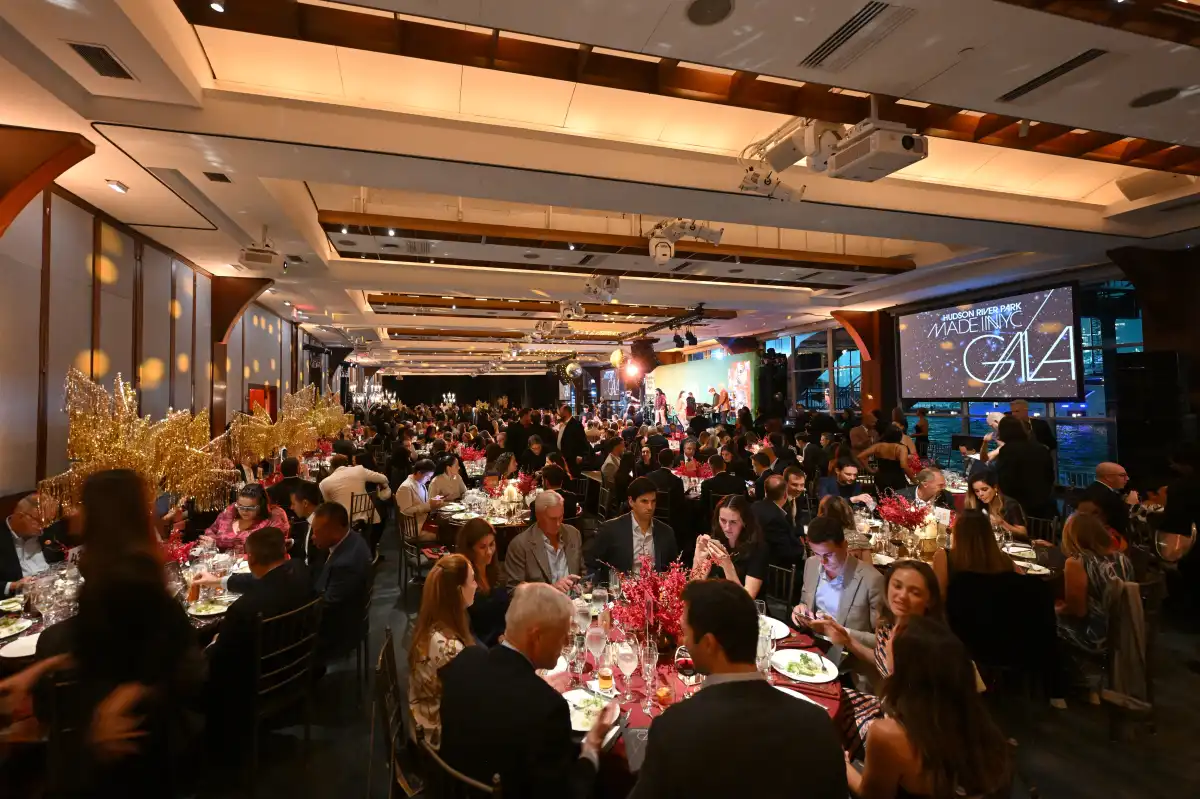
I have long suspected that I lived and died in the disco era in a previous life. The girls on roller skates and the glorious jams at Hudson River Park Friends’ annual gala settled any lingering doubt. At Pier Sixty on October 8, the “Made in NYC” celebration drew inspiration from seventies fashion, music and art, raising $2.2 million to sustain a waterfront that has become essential to so many New Yorkers.
The choice of decade was especially fitting for a city whose cultural life has so often flourished wherever people could find a place to come together. New York’s early disco scene grew from Black and gay communities. David Mancuso’s Loft, launched in 1970, welcomed a multiracial mix of guests around a shared love of dancing. For many, these gatherings offered the freedom to express themselves among others who made them feel welcome. There was a profound generosity in creating the conditions for that collective joy.
I see a similar spirit in Hudson River Park, where the transformation of Manhattan’s western shoreline has opened extraordinary possibilities for daily life. Years of community advocacy helped bring about the 1998 Hudson River Park Act, establishing a framework for turning a waterfront of deteriorating maritime infrastructure into a public landscape. Today, gardens, playgrounds and athletic facilities stretch along four miles of the Hudson. For New Yorkers, the significance is deeply personal: a place to take their children, meet a friend or spend an afternoon with enough breathing room to remember why they love living here.


The evening honored Citi; Gansevoort Square Partners, led by Douglaston Development with Kinwood Partners, CetraRuddy and MVRDV; and Ryan Serhant, founder and CEO of SERHANT. Michael Bloomberg and Diana Taylor joined attendees including Ronny Chieng, Jerry Nadler, Jennifer Fisher and Emilia Serhant. With cocktails, dinner and a soundtrack worthy of the theme, the occasion brought civic purpose into the company of a very good time.
Auctioneer Gabriel Butu kept the fundraising moving with a spirited cash call and live auction. Among the enticements were seven nights in a private Tuscan villa, a stay in the Hudson River Suite at Faena New York and a session on Ryan Serhant’s techniques for pitching, negotiating and closing. New York does appreciate a little seduction with its altruism, and the offerings gave supporters ample opportunity to indulge both.
Executive director Connie Fishman thanked the honorees, board and donors for their contributions to the gala’s success. Their involvement is especially meaningful given the way Hudson River Park is funded. The park is managed by the Hudson River Park Trust, a partnership between New York City and New York State, with Friends serving as its independent fundraising and advocacy partner. Public resources principally support design and construction, while rents, fees, sponsorships, grants and private contributions sustain operations and maintenance. Keeping this destination flourishing requires an ongoing commitment from the individuals and organizations who believe in it.


The proceeds will help support more than 400 free events and programs, alongside landscape care, STEM education, marine science research, habitat restoration and essential upkeep. That breadth matters. A performance can introduce someone to an unfamiliar art form; learning about the estuary can awaken a child’s curiosity about the natural world. Such encounters make the waterfront a cultural and educational resource, with opportunities that remain accessible to those who might otherwise be unable to afford them.
As with a museum or a theater, a park’s cultural value deepens through what happens there. Thoughtful programming gives visitors fresh reasons to return, and sustained funding allows an organization to develop its ambitions with confidence. This is where philanthropy can carry a remarkable space further, supporting the expertise and imagination that make each visit rewarding. Over time, those experiences become part of the surrounding community’s identity, woven into the memories of families who grow up and build their lives nearby.
Long after the party, New Yorkers will be enjoying the places and opportunities its guests helped sustain. Many will never know who contributed, yet their lives will be richer for it. I like to think that the generosity of a single evening can become part of the happiness of an ordinary afternoon. To help a stranger feel more at home in New York is a rather beautiful way to love it.