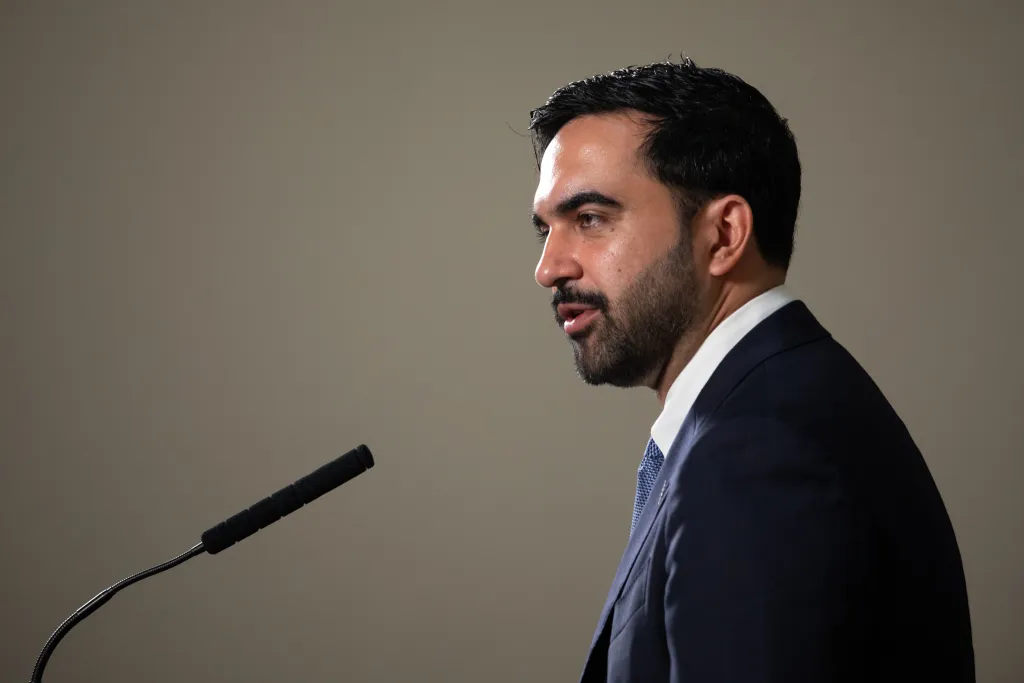
Mayor Zohran Mamdani on Wednesday appeared to defend his team’s use of Signal to communicate with hundreds of online influencers after a report that his head of “new media and cultural communications” sends them talking points, daily updates and interview opportunities through the encrypted messaging app.
The Columbia Journalism Review this week published an article by Columbia University researchers on the use of Signal by Mamdani’s new-media team to relay information to a network of content creators “formed out of the Creators4Zohran group that supported the mayor’s election campaign.”
At least 200 people are in the Signal group and their individual followings range from several thousand to millions of followers, according to the researchers, who cited interviews they conducted with group members. The article said the city doesn’t pay influencers in the group for their Mamdani-friendly posts, but city agencies do pay some of them for work as contractors on some messaging campaigns.
Questions about government officials’ use of encrypted messaging apps have dogged various administrations in recent years, raising transparency and security concerns from watchdogs and good-government advocates.
“New Yorkers get their news in a wide variety of ways, and it is our responsibility to ensure that we communicate information from city government directly to the people of this city, whether that means to all of you, to TV, to radio, to social media, to content creators,” the mayor said Wednesday when asked about the report at an unrelated press conference.
“My administration will always strive to fully comply with all legal requirements, including those that relate to the preservation of city records,” he added. “And if there are any departures from what is legally required, my administration will look into it immediately and take corrective action.”
Messages on Signal can be set to automatically delete after a certain period of time, which is against the city’s archiving and Freedom of Information laws, though there’s no evidence yet this is happening in the Mamdani group. In a statement, the mayor’s Chief Counsel Ramzi Kassem said the city doesn’t have a policy against using Signal, which “can be authorized for employees’ specific uses” in compliance with public record rules.
“Network effects may extend [the influencers’] reach; if many creators post about similar topics, the Instagram and TikTok recommendation algorithms may amplify the messages,” Columbia’s Anya Schiffrin wrote in a recent working paper. “At the very least, seeding New York with newsy updates on and offline creates an impression of ubiquity and omnipresence as well as the sensation that the mayor and his team are hard at work for the city.”
‘The Rules Exist To Protect the Public’
The city’s Department of Records and Information Services, the lead archiving agency, last year released a city employee policy on instant electronic messaging records, calling them “official records under the New York City charter.”
The memo breaks down the difference between “transitory” and “substantive” messages, recognizing “instant electronic messages are considered transitory by default.” But if a user determines the message is substantive — relating to “decisions, actions, or politics of a city office or agency” — the employee should transfer them to a format better suited for long-term storage and access.
The agency previously established rules around electronic programs that auto-delete messages, saying they require prior official approval to be used.
It’s not uncommon for officials to use Signal or similar encrypted apps for internal government communication, despite rules discouraging the practice. Staffers for former Mayor Bill de Blasio did so, as did former Mayor Eric Adams, according to messages seen by The City Reporter.
But city employees’ use of Signal for external communications, such as those with the Mamdani influencer group, is newer.
Grace Rauh, executive director of the nonprofit Citizens Union, said “the rules exist to protect the public.”
As a former journalist, she successfully sued the de Blasio administration for the release of emails between the mayor and outside advisors City Hall claimed were “agents of the city” who should be exempt from disclosure laws.
“City leaders must be deliberate about how they communicate,” Rauh said in a statement Wednesday. “Any discussion of official government business must occur in a manner that ensures records are preserved and accessible under the Freedom of Information Law.”
Our nonprofit newsroom relies on donations from readers to sustain our local reporting and keep it free for all New Yorkers. Donate to THE CITY today.
The post Mamdani Appears to Defend City Hall’s Reported Use of Encrypted Influencer Group Chat appeared first on The City Reporter.