A corner of Monica Carrasco’s kitchen has metal shelves stacked with a toaster oven, a microwave, two hot plates and an air fryer. For more than three years, she’s relied on them to cook family meals — but using only two at a time for fear of tripping the electric system.
Carrasco’s family and the 23 other households in her Lower East Side HDFC co-op had until this week been without cooking gas, after a suspected gas system leak forced them to get creative with food prep or spend more money than they would’ve liked on takeout. Before holidays, her family would have to arrive at the host’s house early to prepare their dishes.
“It was very frustrating,” said Carrasco, a 29-year-old pre-K teacher and the co-op board’s secretary. “What you would be able to make on the stove in 20 minutes takes maybe an hour on the hot plate, like rice, when you make chicken, anything you have to boil. All cooking took an eternity.”
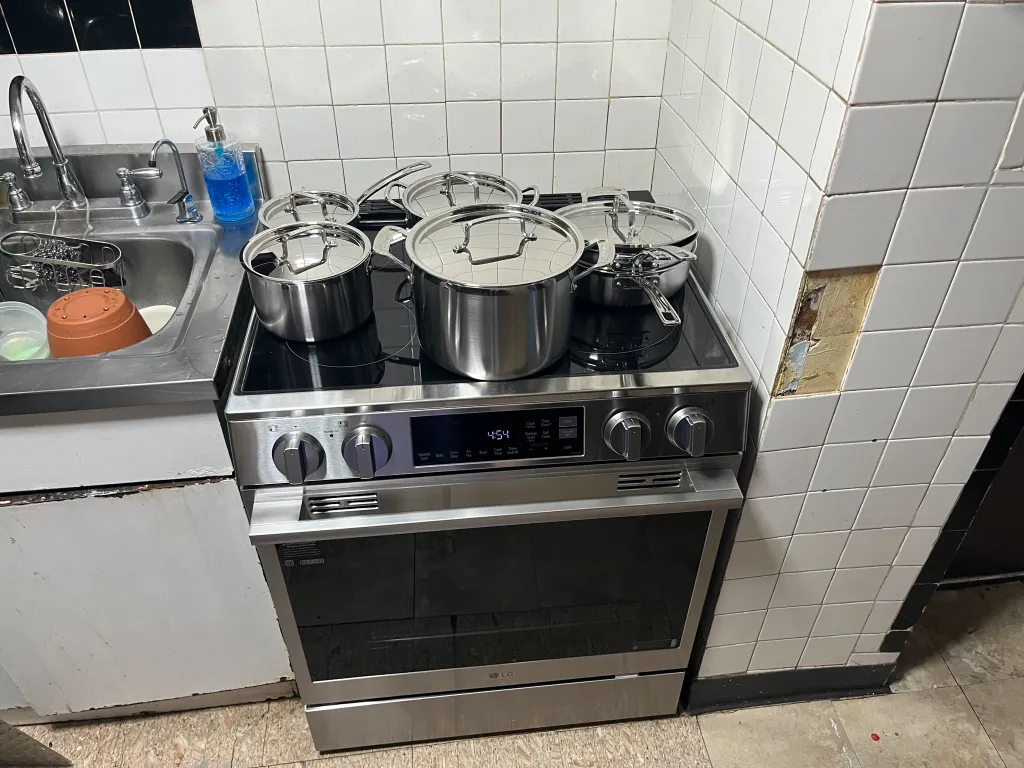
But Wednesday marked a turning point in a yearslong saga: Carrasco and her neighbors received brand-new induction stoves along with shiny new compatible cookware: the finishing touches of a project that included upgrading the building’s electrical system to move the residents off gas cooking for good.

The work and equipment came at no cost to the residents. The nonprofit Urban Homesteading Assistance Board, or UHAB, and the Bronx-based Association for Energy Affordability spearheaded the work. The Lower East Side HDFC was to be first of as many as 16 apartment buildings in the city and Westchester to use a $5 million state grant to switch appliances and building systems to electric.
“This program is providing such a significant benefit to the residents and ultimately it will bring them better air quality, safer conditions. We don’t have to worry about kitchen fires with the induction stoves, and people will finally be able to cook and not on a hot plate,” said Emily Ng, UHAB’s director of member services.
While there’s no official count, UHAB had tracked over four years about two dozen low-income co-ops that had been without cooking gas. City-mandated gas-piping inspections often raise concerns and trigger the shutoff, and the aging buildings must face a choice: redo their gas lines or go electric. But many buildings are in limbo, unable to choose either option because they can’t afford the work’s cost, The City Reporter previously chronicled.
Many buildings Ng tracks are, years later, still without cooking gas. A few have been able to fix their gas piping, which can cost around $150,000, and use their gas stoves once again. Another one or two buildings have upgraded to induction stoves, but doing so entails a complex process of making major electric upgrades. That can cost hundreds of thousands of dollars and even require ripping up the sidewalk outside the building to increase electric capacity.
The funds through the state induction stove program made the work possible for the Lower East Side building.
“Really, I don’t know what we would’ve done,” said co-op resident and former board president Harry Shifman. “We don’t have any kind of wealth like that.”

The stoves’ cost — between $1,800 and $2,200 each, depending on size — as well as pots and pans needed for induction cooking were a comparable drop in the bucket. But even with the complicated, monthslong process of the electrical upgrade, residents were excited to try induction stoves, which use a magnetic current to produce heat.
“The health and safety benefits are a huge driver for it,” said Heather Nolen, director of technical services at the Association for Energy Affordability. “It’s just a more stable, secure way to go.”
Gas stoves can release pollutants that can cause or worsen respiratory illnesses. The gas used in cooking is mostly methane, a planet-warming greenhouse gas more potent than carbon dioxide. An experiment previously detailed by The City Reporter that swapped gas stoves with induction in public housing apartments found markedly improved air quality — and happier tenants.
Carrasco, who lives with her mom, grandfather, brother and a dog — plus a niece and nephew visiting for the summer — said she is eager to return to normalcy. She said her grandfather usually does the family’s cooking, and she’ll have to teach him how to use the new induction stove.
“It’s gonna be a fun little learning curve, I think, with him because we’ve only ever had gas stoves,” she said. “He would put Wite-Out on the little nobs to make sure they lined up” and know the gas was turned off.
Carrasco enjoys baking but couldn’t do much for the last several years. The first thing she’ll make on the new stove, she said, is “probably a pot of rice.”
Two floors above, Shifman and his partner Grete Fries still had a space in their kitchen where a stove would be installed within a few days, since some of the new stoves were damaged in transport.
“I love to cook, but induction is brand-new technology. I’m really interested in what it can do,” Fries said. “By next week —”
“ — we’ll be cooking!” Shifman finished.
Our nonprofit newsroom relies on donations from readers to sustain our local reporting and keep it free for all New Yorkers. Donate to THE CITY today.
The post After Years Without Cooking Gas, First Run of Induction Stoves Arrive in Co-Ops appeared first on The City Reporter.