Photography has been growing in the collective psyche with a quiet, almost predatory elegance.
For too long, the medium has been asked to explain itself against painting, sculpture, and the exhausted hierarchy that mistakes the camera for a witness rather than a maker of worlds. Photography, of course, has always carried its own arsenal. It brandishes evidence, interrupts memory, seduces doubt, wounds nostalgia, and makes a necessary stand against the ridiculous idea that it plays second fiddle to anything or anyone.
A few months ago, I was struck, somewhat violently, by the photography bug at AIPAD’s extraordinary presentation at the Park Avenue Armory. The experience felt almost evangelical. Booth after booth insisted that the photograph is not passive material, but an object of perception, market, intimacy, politics, and desire. It altered my appetite. It made the eye newly hungry.
Now, at CPW in Kingston, that hunger deepens.
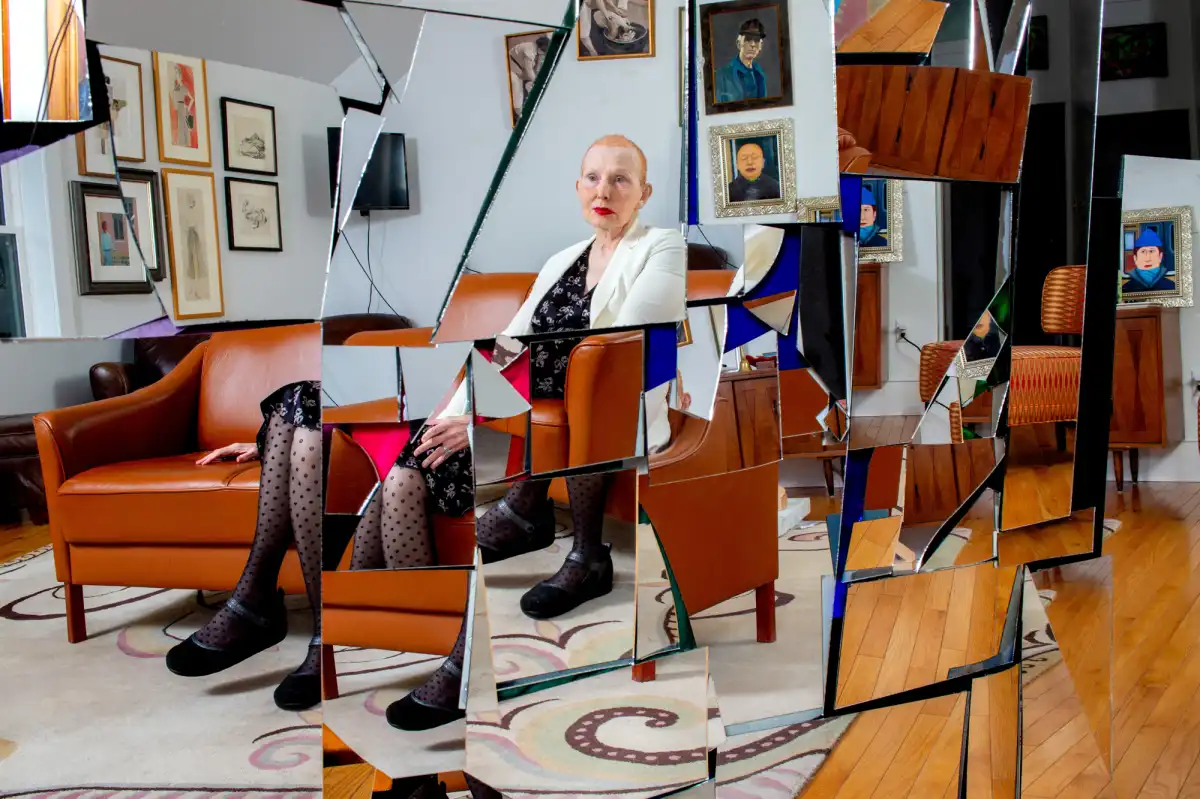
The inaugural **Upstate Photography Biennial**, on view from May 30 through September 6, 2026, arrives as a declaration from a region that has clearly stopped asking permission to be considered central. Organized by CPW curators Marina Chao and Adam Giles Ryan, the exhibition brings together thirty-nine artists whose practices reveal the reach and intellectual seriousness of photographic work across upstate New York. The show does not treat “upstate” as scenic exile from the city, nor as a quaint geographical footnote. It treats the region, rather, as a living state of passage: between metropolitan velocity and rural concentration, public identity and private rupture, historical shadow and contemporary unease.

That setting carries its own ghosts. The Hudson River Valley already holds one of the great visual mythologies of American art. Long before the camera became a defining language of modern life, painters such as Thomas Cole and Frederic Church turned this terrain into a theater of light, awe, divinity, expansion, and moral anxiety. The Hudson River School did not simply paint landscape. It staged America’s dream of itself, often with clouds large enough to conceal the violence beneath the promise.
CPW’s Biennial stands inside that long weather system without bowing to it. Instead, it asks what happens when the region is seen again through contemporary photographic intelligence. The old sublime becomes more complicated. Land is no longer innocent. Bodies bear history. Domestic rooms hold dread. Climate presses against beauty. Truth, once presumed visible, now arrives fractured, contested, and unstable.
Founded in 1977 as the Center for Photography at Woodstock and now housed in a 40,000-square-foot factory building in Kingston, CPW has spent nearly fifty years supporting artists, residencies, public learning, and image-based inquiry. Its relocation from Woodstock to Kingston feels less like departure than expansion. The new headquarters gives the medium an industrial body large enough to hold exhibitions, education, experimentation, and the larger conversations image-making continues to demand.

There were, certainly, many extraordinary contenders. Seth David Rubin’s psychologically charged landscapes stayed with me for their strange interior pressure, as though place itself had become unstable under the weight of thought. His images do not merely depict terrain. They suggest that the natural world can absorb anxiety, memory, and private disturbance until it begins to behave like a mind.
Allison DeBritz’s *Hand Her the Knife Blade First* offered another kind of delicious danger. The series reads, arguably, as a feminist manifesto with teeth: sensual, confrontational, and almost wickedly unresolved. It leaves one objectified, enraged, turned on, and empowered in the same breath, which is no small achievement. DeBritz appears to understand that feminist image-making does not always need to purify desire. Sometimes it must drag desire into the room, sharpen it, and make everyone look at what they have been trained to consume.
Yet my personal favorite was Tanya Marcuse’s *Canto XIII*.

Marcuse enters through Dante, decay, and a kind of botanical damnation. Drawing from Dante Alighieri’s fourteenth-century epic poem *Inferno*, specifically Canto XIII, the work invokes one of the most haunting passages in Western literature: the forest where the souls of the dead have been transformed into trees. In Dante’s vision, the body loses its familiar privilege. Flesh becomes bark. Voice emerges through injury. The self is trapped inside growth, rooted in punishment, no longer fully human and not peacefully natural.
Marcuse does not merely illustrate Dante. She translates medieval terror into photographic matter. Her image asks what it means for the body to become landscape, for suffering to assume vegetal form, for consciousness to be trapped in branch, root, leaf, and wound. That question feels newly severe in a century defined by ecological dread and psychic estrangement. Perhaps the horror is not that the dead become trees. Perhaps the horror is that the living forgot they were never separate from them.
In many ways, this is where the Biennial’s larger argument crystallizes. The camera is often described as a tool of capture, as though its highest task were to preserve what stands before it. Marcuse reminds us that the medium can also summon. It can pull literature, theology, ecology, punishment, and death into a single field of vision. The photograph becomes less window than threshold.
CPW’s inaugural Biennial offers a portrait of a region thinking through image, land, history, fragility, and transformation. Marcuse’s *Canto XIII* remains its unforgettable dark bloom: a reminder that ancient terror can still grow leaves, and that the photograph, when handled with real power, can make the dead speak through trees.
The Upstate Photography Biennial is on view at CPW, 25 Dederick Street in Kingston, through September 6, 2026. Admission is free. For more information, visit cpw.org.