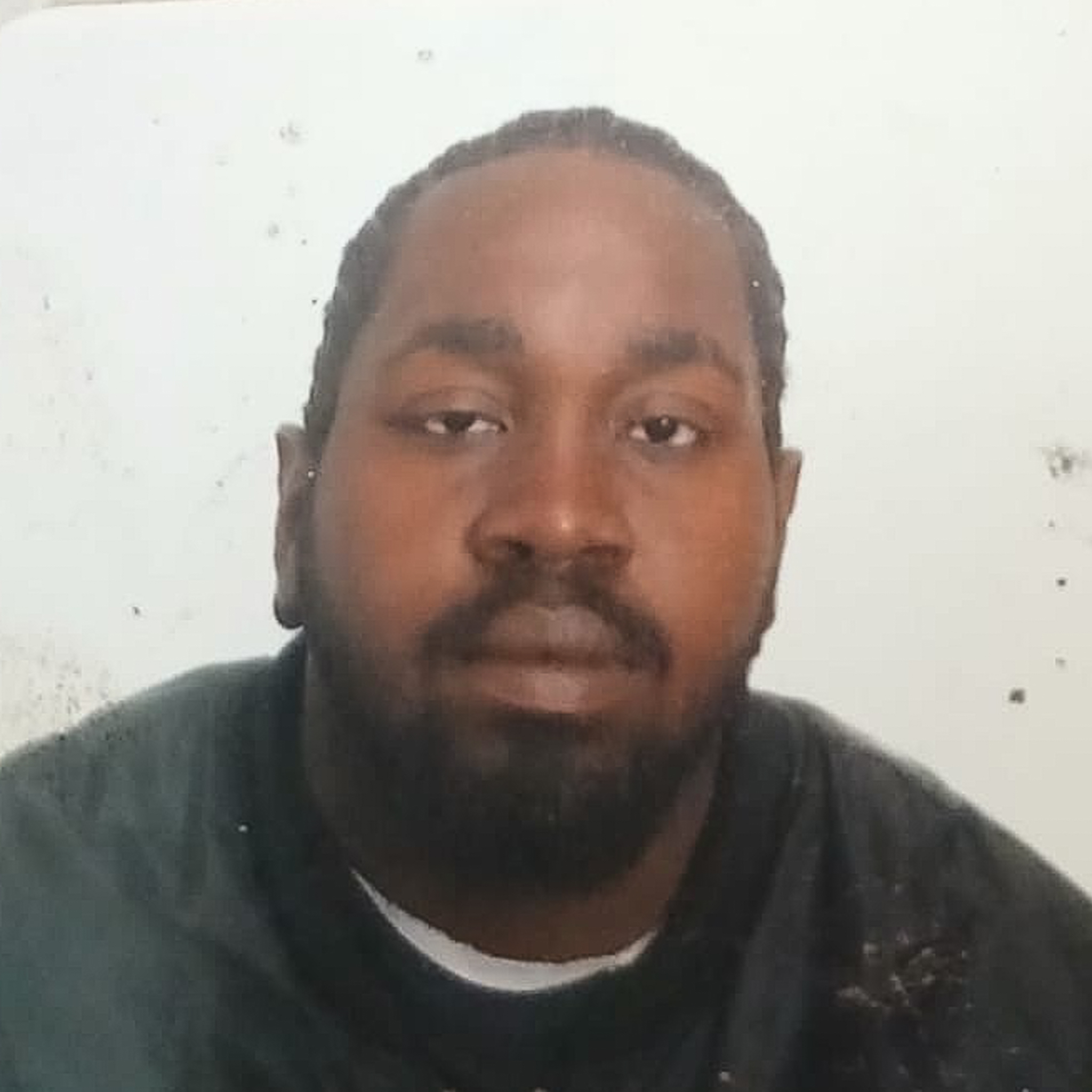
The killing of Aaron Bonnett in his parents’ home in The Bronx nearly eight years ago hardly made a public ripple.
Three brief media reports noted that the 31-year-old was found on his bedroom floor with a puncture wound to the neck and head trauma — and that police were interested in questioning his girlfriend.
But the news reports stopped there, and the case yielded no arrests as the mystery surrounding Bonnett’s death continued to consume his parents.
“I pray everyday for closure to God — every day — because I have no idea what happened to my son,” his father Anthony Bonnett, who discovered Aaron’s body, recently told THE CITY.
Now, disciplinary records released by the NYPD after THE CITY won a potentially far-reaching lawsuit opening up 2,000 pages of previously confidential records finally provide the Bonnett family some clues.
The documents reveal that police officers responded to four successive reports of domestic violence from Aaron Bonnett’s home on the night of his death, that they failed to follow NYPD protocols in response to each of those calls — including failing to stay with Bonnett after he was taken to a hospital for a psychiatric evaluation — and that some of them submitted false reports about their actions.
After THE CITY shared the documents with Bonnett’s parents, they concluded that had NYPD officers merely followed standard procedure that night, their son would still be alive.
A similar assessment was, in fact, reached earlier by the NYPD’s then First Deputy Commissioner, Benjamin Tucker. The police missteps on January 8, 2018 were so sweeping that he concluded in a November 2021 document turned over to THE CITY as a result of the suit that, “The failure to conduct a proper investigation and make the arrest in what is a ‘must arrest’ situation set in motion a chain of events that ended in the unsolved murder.”
Last year, Manhattan State Supreme Court Justice Lyle Frank ruled in favor of THE CITY in the suit, which it filed 2-½ years ago with the assistance of the nonprofit Reporters Committee for Freedom of the Press and pro bono counsel at Davis Wright Tremaine. His decision required the department to turn over documents from all disciplinary cases resolved by then Commissioner Keechant Sewell in the first six months of 2022. The NYPD responded by forwarding more than 2,000 pages involving more than 130 cops on a rolling basis that continued until last May, after which reporters at THE CITY began a lengthy review.
The court decision broke new ground in an ongoing effort to bring transparency to the often opaque police disciplinary process. In its motions, THE CITY contended the department had violated the state’s Freedom of Information Law by failing to respond to its request for the records for more than a year and dragged its feet even after the judge required it to produce the documents.
The NYPD had kept such records under wraps for decades and only began posting limited files online following the June 2020 repeal of a New York law that allowed for such secrecy. Those records mostly concern cases that were resolved in public disciplinary trials. The cases produced as a result of THE CITY’s lawsuit were largely resolved through settlements negotiated privately between the officers and the department.
They range from the consequential to the scandalous — one involved drunken on-duty sex in a bathroom stall — to the mundane, as in the case of an officer who was seen outside her home while on sick leave.
Together, they provide a previously unseen picture of how the department attempts to rein in wayward, often abusive, behavior and, most strikingly, how it has dealt with domestic violence, both in response to emergency calls and also committed by members of the force.
In the Bonnett case, which is still unsolved, the department slapped disciplinary charges on a sergeant and ten officers, mostly involving the loss of vacation days.
The broad range of cases unearthed through THE CITY’s suit extend beyond those involving domestic violence accusations. One concerns Joe Burrowes, an officer who trained rookie cops on Manhattan’s Upper West Side by quizzing them about their precise location after driving them through their new precinct in a patrol car. When the rookies were uncertain of where they had stopped, he pointed his service weapon at them, according to the records.
“What do I have to do to make you remember?” he asked one in June 2021, while aiming his gun at the cop’s rib cage, according to a suspension memo included among the documents. “Do I have to put it to your chest or do I have to pistol whip you with it?”
Burrowes was disciplined with a year probation, 27 suspension days and the loss of three vacation days, the records show. An attorney for Burrowes didn’t respond to an email seeking comment.
In another case, Sgt. Jamar Lamey chased a man who shouted an expletive at him as he and his colleagues were dispersing a late-night crowd gathered in the South Bronx. Lamey then tased him in the back and cycled four additional electrical charges into him, even though “the person was not posing a threat or resisting,” according to the documents.
The department docked the sergeant 60 days but allowed him to remain on the force. The Bronx district attorney’s office thought that insufficient. It later determined Lamey’s actions were criminal, leading him to plead guilty in November 2024 to official misconduct. Only then was he required to leave the force.
The victim of the tasing, 29-year-old Augusto Sanchez, suffered “substantial pain to his body, a bleeding laceration to his forearm and elbow, a swollen finger, and pain in his back,” according to a press release from the Bronx DA’s office.
Sanchez recently told THE CITY, “I was shocked. I didn’t really do nothing and didn’t deserve to get tased. I don’t think he deserves to be a cop.”
An attorney for Lamey didn’t respond to a request for comment.
The Domestic Violence Thicket
Allegations involving domestic violence factored dramatically in the files in two ways.
In 20 of the 130-odd cases, the alleged perpetrators of domestic violence were police officers, a problem that has plagued the department for years. In just five of those 20 cases, officers were removed from the force.
Those who were allowed to stay included an officer whose wife said he choked her to the point that she couldn’t breathe for a few seconds; a police captain whose daughter, a minor, said he forcibly grabbed her hair; and an officer who admitted throwing an Advil bottle that struck his wife in the face. Their penalties typically included a year’s probation in which any additional infraction could lead to termination, counseling and a significant loss of vacation days.
In five other cases that focused on officers’ responses to domestic abuse incidents on the job, cops were charged with serious lapses.
Officers Lisa Williams-Peter and Michael Moses were assigned a 911 call concerning a family dispute in the 123rd Precinct on Staten Island in February 2020 in which a woman said her intoxicated partner was banging on her front door and threatening her.
She told officers he had “cracked the back of my head” two days earlier but that she hadn’t called for help even though she had a limited order of protection against him.
A memo by the commanding officer of the unit that investigated the incident states that when the victim began to cry, Williams-Peter told her to “relax yourself.”
The paperwork continues: “She then begins berating the complainant and yelling at her ‘you enable him;’ ‘You should have called us on Sunday;’ ‘why didn’t you follow through?’”
At one point, the woman mentioned that her partner had threatened to hurt her if she reported the assault.
“I had blood all in the back of my head,” she told the officers, according to the paperwork.
Williams-Peter responded, “You allowed it to.”
The officers let her partner leave the scene shortly after their arrival and didn’t take a complaint report. The internal police investigation of their performance found that they failed to confirm the order of protection and had sufficient grounds to arrest the perpetrator for the earlier assault.
When interviewed by the investigators, Williams-Peter defended her statements, saying she didn’t see evidence of a prior beating and that the order of protection she read seemed to allow the woman’s partner on the scene. She said she believed, “If someone hurt you, you should have called the police.”
Both officers were suspended 20 days and docked 20 vacation days in a negotiated settlement approved by Sewell in March 2022. Attempts to reach the officers, including through their union, were unsuccessful.
Christian Dudley was another officer cited for discourteously treating a victim of domestic violence and her family members, as well. Internal documents record his agreement with that assessment and expression of remorse.
He went to the scene of a family dispute in a public housing complex in upper Manhattan in December 2020 and advised the family of a woman not to open the apartment door to her estranged boyfriend, whom he and his partner had interviewed for 20 minutes without taking action.
Within hours, Dudley and his partner were called back to the scene after the estranged boyfriend gained access to the apartment and beat and punched the woman, leaving her face swollen.
Dudley “scolded” and “yelled” at the woman’s mother and sister for having let the assailant into the apartment, according to a summary memo written by police investigators.
“I gave you an order… it happened because of the one thing I told you not to do… you did!” he told the woman’s sister, according to the memo.
Dudley later told investigators that his behavior had been “reprehensible.”
The investigators faulted him for failure to conduct a proper investigation during their first encounter with the estranged boyfriend and for discourtesy to the victim and her family.
He agreed to a negotiated settlement resulting in the loss of 40 vacation days and a year’s probation, but Sewell disapproved of the penalty and reduced it — imposing just the loss of vacation days.
The documents don’t include an explanation of her decision and she didn’t respond to a request for comment. An attorney for Dudley didn’t respond to a request for comment.
Last October, Police Commissioner Jessica Tisch announced that she was making the department’s approach to domestic violence a priority. With former Mayor Eric Adams at her side, she announced creation of a specially trained unit of 450 detectives that would handle such cases across the city and spare victims from undergoing identical interviews with different teams of investigators.

Earlier this month an NYPD spokesperson, who declined to provide a name, added that starting this year all new department recruits would receive revised and expanded training on responding to domestic violence incidents.
‘Lethal Consequences’
In terms of lapses and dire consequences in the cases reviewed by THE CITY, Bonnett’s stands out. A June 2023 report by the Commission to Combat Police Corruption, a city oversight entity, focused on it, concluding that it demonstrated “the lethal consequences that can occur when officers disregard department policy.”
The records obtained by THE CITY show that teams of officers in the 48th Precinct serving under Sgt. Brian Williams were assigned to respond to a succession of four calls about a domestic incident at the Bonnett home in early 2018.
The calls were made by a woman with an order of protection against Bonnett, according to disciplinary records concerning several of the responding cops. At one point during the evening, the woman told officers that Bonnett had threatened her with a screwdriver and a knife, according to the documents.
Bonnett’s parents find that hard to believe. “My son was a saint compared to the people in the neighborhood, and I’m not saying it because it was my son,” his mother, Ann Bonnett, told THE CITY.

In separate interviews, both parents described their son as big-hearted but naive and disputed many of the woman’s claims. They told THE CITY that she was homeless, that their son sometimes allowed her to stay in their townhouse where he lived, and that she sparked most of the friction during their brief relationship. They said they counseled him to stay away from her.
Whatever the truth, the woman’s allegations, coming after an order of protection, did not prompt the four sets of responding officers — nor a training officer overseeing two of them — to arrest Bonnett, even though the circumstances created a “must-arrest” situation, according to multiple citations in the investigative files.
The responses to every call were marked by blunders that, in retrospect, read like missed opportunities to avert disaster.
On the first call, the two officers didn’t run a computer check to confirm the order of protection and wrongly believed they had no basis to arrest Bonnett.
On the second, the officers indicated they had responded when they hadn’t, conducting a car stop, instead.
In response to the third call, officers took Bonnett to St. Barnabas Hospital for a psychiatric evaluation, but didn’t stay with him, and he wandered out of the hospital and went back home.
On the fourth response, officers once again took him to St. Barnabas and failed to stay with him.
“The suspect subsequently left the hospital and again returned to the complainant’s residence, where he was later found dead,” the commission’s report concluded, incorrectly referring to the Bonnett’s home as the woman’s. “The complainant could not be found. Police believed that she or a family member may have killed the suspect after he returned to her residence.”
Bonnett’s father Anthony said he received a call from his son the night of the incident while he was on a trip to Barbados. He recalls Aaron telling him the woman was “acting up” before the line abruptly went dead.
Those were the last words he would hear from his son.
He returned to The Bronx the next evening, he said, and called the precinct to ask for a police escort to the home out of fear that the girlfriend, of whom he was wary, might be there.
He said the officer led him through the house, which was a wreck, with macaroni all over the floor. The officer then suddenly told him that the police had found his son.
“He’s behind the bed, dead,” Anthony Bonnett remembers the officer telling him.
Although initial reports said Aaron sustained a puncture wound to the neck, his father learned from an employee at the medical examiner’s office that he had died from gunshot wounds to the torso. A spokesperson for the office confirmed that as the cause.
A police department spokesman said that after nearly eight years the Bonnett homicide is still under investigation and that there have been no arrests.
Discipline meted out to the responding officers varied, depending on their roles.
The sergeant, Williams, was docked 40 vacation days for failure to supervise and failure to ensure Bonnett was arrested, although the records note that responding officers failed to provide him with pertinent information during the incident.
The cop who got the stiffest penalty was David Smart, who was training two other officers that night. He pleaded guilty in a negotiated settlement to failing to conduct a proper investigation, failing to make a required arrest and four related charges.
He agreed to lose 35 vacation days and was placed on probation for a year, the records show.
The remaining officers were stripped of between three and 35 vacation days.
Representatives of the police officers’ and sergeants’ unions didn’t respond to requests about their members. An attorney who represented the vast majority of officers in the case, and who has since retired, couldn’t be reached for comment.
Aaron’s mother, Ann, said she called the detective handling the case every week for 2½ years. When she came to believe the case would never be solved, she stopped calling.
Only recently did she learn of and review the documents provided by reporters for THE CITY that laid out the police lapses leading up to her son’s death.
“If not for their neglect,” she said, “my son probably would be alive today.”
Related