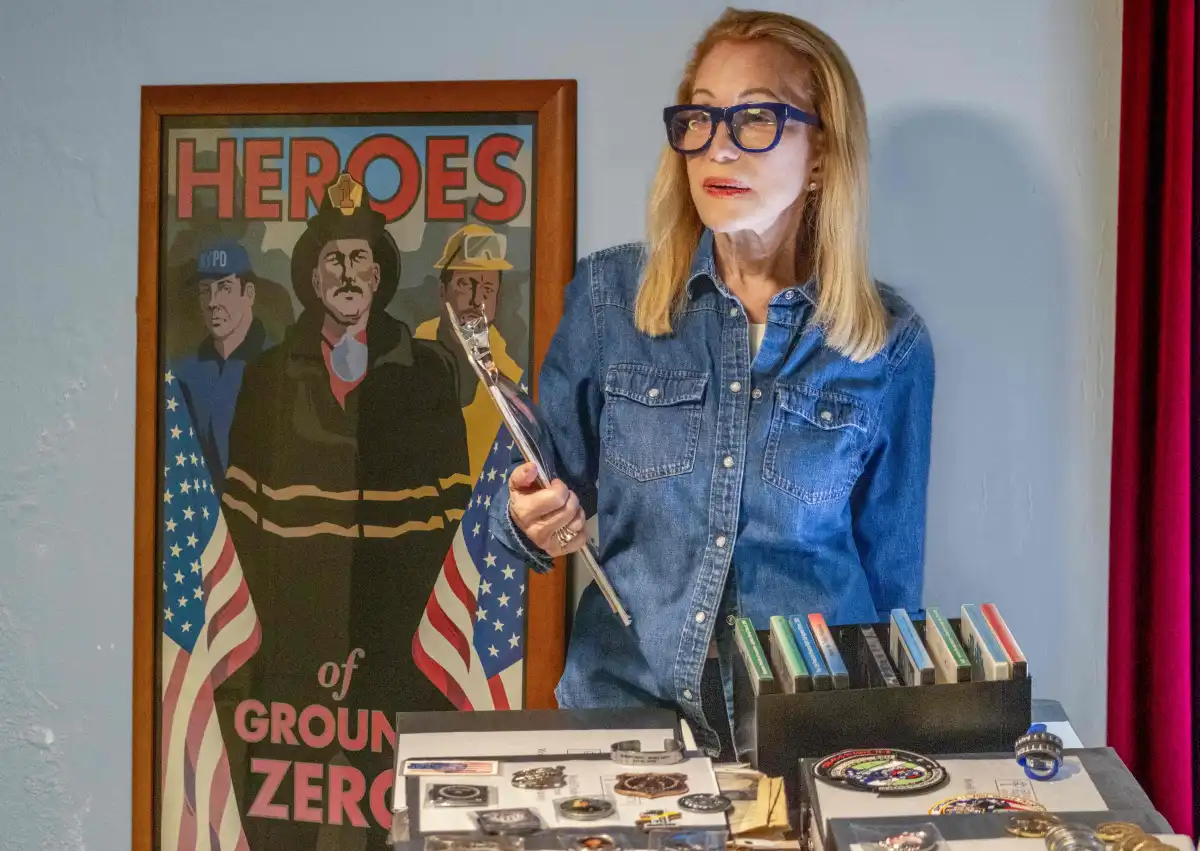
Today, Harrison, while serving as president of the Gramercy Park Block Association, also keeps the memories of those lost and the efforts of the thousands of volunteers alive with photos, documents, and all things connected to that terrible day.
Harrison, affectionately known to many as “the mayor of the historic Gramercy Park,” has organized a room full of archives, news clippings, videos, interviews, photos, and personal reflections at the 13th Precinct and headquarters of the Manhattan South Command, at 235 East 21st St.
Some of those who were lost that day from her community included Police Officers Bobby Fazio and Moria Smith, the latter being the only NYPD female officer killed on 9/11. She left behind her two-year-old daughter, who is now a police officer in the NYPD.
“We lost 44 neighbors and first responders, two 13th Precinct officers, one ESU officer, and 14 of his fellow members of the special operations command,” Harrison said. “We set up a command center that night at the 13th Precinct, and it was the only operational center hosting hundreds of volunteers from all over the city. They just wanted to help.”
Harrison remembered that day vividly.
“Like everyone else, we thought at first it was an accident, sat and watched television and saw the [second] plane hit the tower,” she said. “I ran out to the park, and hundreds of people were streaming into the area covered with dust. So we opened the park. Many sat silently on the benches with their heads in their hands and didn’t speak.”
The 35-year-old Gramercy Park Block Association mobilized residents in 50 neighborhood buildings on 9/11 to serve 24/7 meals donated by local restaurants and delis. They also provided places to sleep for first responders who poured in from around the country. The group also coordinated delivery of supplies for the rescue and recovery operations, directing hundreds of trucks of supplies for the effort.
“Everyone wanted to support the first responders who were already working on the pile, so people from throughout the country stopped at our command center because officials wanted to clear those who were seeking to help,” Harrison said. “They had to go through our command center to be utilized and gain access to the pile to join in the search for survivors and later remains.”
Some of the archives included cards, well wishes and drawings from hundreds of children from around the world. Every wall of the precinct was papered with cards and drawings.
“Our archives tell their stories and the stories of all those children and people who reached out with their cards and drawings,” she said. “Children and parents made baked goods and dinners for the officers for months – many first responders would read the cards and weep after returning from working on the pile.”
Today, these cards, documents, and 50 photo albums of the more than eight months after the attack are on display at the 13th Precinct stationhouse. In addition, there are more than 20 binders of news articles and clippings documenting and from the attack and the aftermath. Plaques cover the walls expressing gratitude for first responders’ support and work.
“It was a very emotional time, and we were grateful to be able to help,” she said. “We had shifts all night long after the attack so that we could be there for our first responders. The bonds we formed with officers, spending months at memorials, these bonds are now permanent. We celebrate holidays and keep in touch with retirees. We continue to do this to this day.”
For the stately Harrison, it was a way to deal with the intense loss that was felt throughout the city.
“To me, this was an extremely meaningful part of my life, to organize such round-the-clock support. Nobody was operational but us, as most were at the pile. Helping the city recover was the greatest joy of my life,” she said.
